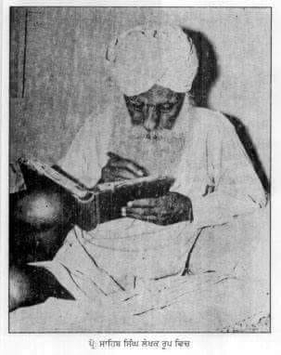
Prof. Sahib Singh
Prof. Sahib Singh (1892-1977) was a towering Sikh scholar and grammarian, best known for his ten-volume exegesis Sri Guru Granth Sahib Darpan and his pioneering work on Gurbani grammar (Gurbani Viakaran).
Portrait via Wikimedia Commons.
Courses
Gurmukhi & the Grammar of Gurbani
This course teaches how the Gurmukhi script and the grammar of Gurbani work together to unlock the correct meaning of the sacred word. Students learn the thirty-five letters, the vowel signs (ਲਗਾਂ ਮਾਤ੍ਰਾਂ), and the additional marks, and then study how a final vowel sign on a noun or verb changes meaning. The…
Introduction to Gurmat (Sikh Theology)
A rigorous yet accessible introduction to Gurmat, the theology of the Guru's teachings, covering the nature of the Divine, the Shabad Guru, the path of devotion, grace and effort, ethics and equality, and the meaning of liberation.
Reading Gurmukhi: The Script
A gentle beginner's introduction to the Gurmukhi script, the writing system in which the Guru Granth Sahib Ji and much Punjabi literature are recorded. This course traces the script's history and its association with Guru Angad Dev Ji, walks through the Painti (the thirty-five base letters) grouped by how they are…
Introduction to Sri Guru Granth Sahib Ji
A college-level introduction to Sri Guru Granth Sahib Ji, the eternal living Guru of the Sikhs. The course examines how the scripture was compiled by Guru Arjan Dev Ji and completed under Guru Gobind Singh Ji, the community of voices it gathers (Gurus, Bhagats, and Bhatts), its arrangement by Raag, its script and…
Understanding the Mool Mantar
An academic, term-by-term study of the Mool Mantar, the foundational statement that opens Sri Guru Granth Sahib Ji at Ang 1. The course explains each phrase in plain English, situates it within classical and modern Sikh scholarship, and shows how these few words frame the whole of Gurbani and shape Sikh life.…
Reading Japji Sahib
An academic study of Japji Sahib, the foundational composition of Guru Nanak Dev Ji that opens Sri Guru Granth Sahib Ji at Ang 1. This course examines the structure and themes of the bani rather than reproducing or paraphrasing its lines: the Mool Mantar and its naming of the Divine; the critique of empty ritual;…
Learning Punjabi Through Gurbani
An intermediate course that builds Punjabi vocabulary and reading comprehension through the language of Gurbani. You will learn high-frequency devotional words and their meanings, see how the older Sant Bhasha register differs from everyday modern Punjabi, grasp core grammar concepts at a conceptual level, and…
Guru Granth Darpan: Prof Sahib Singh's Life Work
A comprehensive intermediate study of Prof Sahib Singh (1892-1977) and his monumental ten-volume ਸ੍ਰੀ ਗੁਰੂ ਗ੍ਰੰਥ ਸਾਹਿਬ ਦਰਪਣ, the standard Punjabi word-for-word commentary (ਟੀਕਾ) on the ਆਦਿ ਗ੍ਰੰਥ. The course traces his improbable journey from a Hindu Pohuwindi family to becoming the foremost grammarian of ਗੁਰਬਾਣੀ, examines the grammatical methodology that anchors the Darpan, and evaluates why his ਟੀਕਾ became the most trusted Punjabi commentary among Sikh scholars, ਟਕਸਾਲ traditions, and ordinary ਸੰਗਤ alike.
Guru Angad Dev Ji's Saloks: Wisdom in Few Words
This course examines the sixty-two saloks composed by Guru Angad Dev Ji and preserved in the Sri Guru Granth Sahib Ji. Saloks are brief, aphoristic verses in which profound spiritual and moral wisdom is concentrated into a few lines. Students will engage closely with the themes, imagery, and theological teaching of these compositions, understanding them in their scriptural context and as expressions of the Second Guru's spiritual vision.
Anand Sahib: The Song of Bliss — A Deep Study
This course offers a deep study of Anand Sahib — the forty-stanza composition by Guru Amar Das Ji that has become one of the most central texts in daily Sikh practice. Students will examine the composition's themes of spiritual bliss, its poetic structure, its place in the Sri Guru Granth Sahib Ji, the theological concepts it develops, and its role in Sikh liturgical practice from birth to death.
The Lavan: Marriage, Love, and Union with Waheguru
The Lavan — four stanzas composed by Guru Ram Das Ji in Raag Suhi — form the scriptural basis of the Sikh wedding ceremony (Anand Karaj) and one of the most profound theological statements in the Guru Granth Sahib Ji on the soul's journey toward union with Waheguru. This course provides a deep study of each of the four Lav, examining the textual meaning, spiritual symbolism, and practical significance of this composition. Students will explore how Guru Ram Das Ji uses the metaphor of marriage to describe stages of spiritual progression, and why the Lavan remain central to Sikh devotional and ceremonial life today.
Sukhmani Sahib: The Jewel of Peace — A Deep Study
Sukhmani Sahib — 'Jewel of Peace' — is one of the most beloved compositions in the Guru Granth Sahib Ji. Composed by Guru Arjan Dev Ji in Raag Gauri, it consists of 24 ashtapadis (eight-stanza units) each preceded by a slok, exploring the nature of Waheguru, the path to liberation, and the character of the ideal Sikh devotee (the Brahm-gyani). This course provides a structured, lesson-by-lesson exploration of the major themes and theological content of Sukhmani Sahib, drawing on Prof. Sahib Singh's Darpan commentary and examining the practical significance of this composition for daily Sikh devotional life.
ਆਤਮਾ and ਜੋਤਿ: The Soul Beyond All Physical Categories
This course examines a central theological claim of the ਸ੍ਰੀ ਗੁਰੂ ਗ੍ਰੰਥ ਸਾਹਿਬ: that the divisions humans impose on one another — gender, caste, race, and the shape and condition of the body — are ਮਾਇਆ, temporary illusions that obscure the one reality. Drawing on verified passages from ਜਪੁਜੀ ਸਾਹਿਬ, ਸੁਖਮਨੀ ਸਾਹਿਬ, ਅਨੰਦ ਸਾਹਿਬ and the wider Granth, and reading them through the disciplined exegetical method of Prof. Sahib Singh, students learn that the ਜੋਤਿ within every being is the only identity that stands before ਅਕਾਲ ਪੁਰਖ. We trace the movement of Gurbani thought from ਹਉਮੈ — the ego that manufactures separation — toward the recognition of ਇਕੁ ਨੂਰ, the single Light from which all creation springs. Across twelve lessons the course builds from theology to ethics to daily ਨਾਮ ਸਿਮਰਨ practice, so that the learner does not merely understand that the soul transcends the body but begins to see other people as the Gurus saw them…
Guru Amar Das Ji's Gurbani: Themes of Equality and Liberation
This advanced course offers a thematic study of Guru Amar Das Ji's extensive Gurbani — over 900 compositions in the Sri Guru Granth Sahib Ji — with particular focus on the themes of equality, liberation, the critique of false religion, and the vision of the ideal spiritual community. Students will engage closely with selected compositions and with scholarly commentary, developing skills of textual analysis and theological interpretation.
Japji Sahib: A Deep Study
This course offers a deep theological and literary study of Japji Sahib, Guru Nanak's foundational composition that opens the Guru Granth Sahib and is recited daily by Sikhs. Each of the 38 pauris (stanzas) and the Mool Mantar are examined for their theological content, linguistic structure, and place in Sikh spiritual practice. The course draws on Prof. Sahib Singh's authoritative commentary and grounds Japji's teaching in Guru Nanak's broader theological vision.
Asa Di Var: Morning Prayer and Social Vision
This course offers a comprehensive study of Asa Di Var, Guru Nanak's ballad in Asa raag that is sung as the morning prayer in gurdwaras worldwide. The course examines each of the 24 pauris and their accompanying slokas, exploring the composition's powerful social critique of caste, ritual, and religious hypocrisy alongside its positive vision of truthful living, honest labor, and the community of the Naam. Special attention is given to the composition's structure as a var (ballad) and its relationship to the Bhagat bani slokas interspersed throughout.
Guru Ram Das Ji's Gurbani: Devotion, Longing, and Raag
This course undertakes a systematic study of the Gurbani composed by Guru Ram Das Ji across multiple raags in the Guru Granth Sahib Ji. Guru Ram Das Ji composed more than 600 hymns, making him one of the most prolific contributors to the scripture. His bani is marked by intense devotional longing (virha), radical humility, and a deep sense of the soul's dependence on the Guru's grace. Students will explore major compositions including the Lavan, the Chhant compositions, and select sabads across raags, developing an understanding of both the theological content and the musical context of Guru Ram Das Ji's spiritual poetry.
Compiling the Adi Granth: Guru Arjan Dev Ji's Vision, Method, and Universality
In 1604, Guru Arjan Dev Ji accomplished one of the most extraordinary acts in the history of world religion: the compilation of an interfaith sacred scripture that included the compositions of Sikh Gurus, Hindu bhagats, a Muslim saint, and others — all organized not by tradition or author but by musical mode (raag). This course studies the vision, methodology, and theological significance of the Adi Granth's compilation, examining its unique character as a universalist scripture, its editorial principles, the sources it drew on, and its subsequent elevation to the status of eternal Guru.
Guru Arjan Dev Ji's Gurbani: Themes, Rasas, and Message
Guru Arjan Dev Ji composed 2,218 hymns in the Guru Granth Sahib Ji — the largest contribution of any single author. His bani spans multiple raags and poetic forms, ranging from the deep philosophical inquiry of Sukhmani Sahib to the joyful celebration of the divine presence, from intense virha (longing) to settled sehaj (equipoise). This course provides a thematic study of Guru Arjan Dev Ji's Gurbani, examining its major theological ideas, its use of literary rasas (emotional registers), and its enduring message for Sikh devotional life.
ਕੁਦਰਤਿ and ਹੁਕਮਿ: Gurbani's Theology of Creation
Sri Guru Granth Sahib contains one of the world's most sophisticated theologies of creation. This 250-level course undertakes the exegetical work of systematically studying what Gurbani actually says about ਕੁਦਰਤਿ (the created order as divine expression), ਹੁਕਮਿ (the divine command and law through which creation operates), and humanity's place within that order. Across twelve lessons we move from the cosmology of Japji Sahib through the panentheism implicit in Gurbani's vision of nature, into the five elemental building-blocks of the cosmos, the ਜੋਤਿ (divine light) that animates every creature, and the ethical consequences that follow: trusteeship over ownership, the ecological vice of ਅਹੰਕਾਰ, and the ecological virtue of ਸੰਤੋਖ. We then widen the canon to consider the Dasam Granth, the Sarbloh Granth, and the Vaaran of Bhai Gurdas, before closing with the implications of this theology for contemporary environmental ethics and action. The aim is not advocacy but disciplined reading — letting the Guru's own words shape a coherent account of why creation matters, what it reveals about the One, and how human beings are called to live within it…
Gurbani Exegesis with Prof. Sahib Singh
An author-as-professor course about Prof. Sahib Singh (1892-1977), among the most influential interpreters of Sri Guru Granth Sahib. The course studies who he was, the grammar-based method he built for reading Gurbani, his ten-volume Sri Guru Granth Sahib Darpan, his companion Gurbani Viakaran, his study of the…
Reading Larivaar and Pad-Ched: How Gurbani Is Written and Read
A graduate-level study of how Gurbani is set down on the page and how it is correctly read aloud. The course contrasts ਲੜੀਵਾਰ (larivaar), the unbroken running script with no spaces between words, against ਪਦ ਛੇਦ (pad-ched), the modern word-separated text. It examines the interpretive choices and risk
The Many Tongues of Gurbani: Sant Bhasha
Sri Guru Granth Sahib Ji does not speak in one single language. It moves freely between Punjabi, the devotional Braj of the Bhakti poets, Persian and Arabic terms, the heavy Sanskritic register often called Sahaskriti, and many regional dialects. This blended saintly speech is known as Sant Bhasha,
Sidh Gosht: Guru Nanak's Dialogue with the Siddhs
This advanced course offers a close reading of the Sidh Gosht, Guru Nanak's extended philosophical dialogue with the Nath Siddhs preserved in the Guru Granth Sahib in Ramkali raag. Students examine each of the composition's pauris for their theological arguments about liberation, the Guru, the householder path, the nature of the self, and the relationship between human effort and divine grace. The course requires familiarity with Nath yogi terminology and Sikh theological concepts introduced in earlier courses.
Guru Tegh Bahadur Ji's Saloks: A Deep Study of Detachment and Courage
This course provides a rigorous theological and textual analysis of the fifty-seven Saloks of Guru Tegh Bahadur Ji in the Guru Granth Sahib. Drawing on Prof. Sahib Singh's exegetical method and Sikh theological scholarship, students engage deeply with the Guru's teachings on bairag (detachment), impermanence, the nature of the mind, and the fearless courage that flows from genuine surrender to Waheguru.
Conquering Kaam: Spiritual Discipline Against Lust in the Sikh Tradition
This 300-level course undertakes a disciplined exegetical study of ਕਾਮ (lust, compulsive desire) as it is diagnosed and treated within Sri Guru Granth Sahib, the Dasam Granth, and the Vaaran of Bhai Gurdas. Rather than treating ਕਾਮ as a subject of moral scolding, the course follows Gurbani's own framing of it as a spiritual disorder — a force that fractures the ਮਨ, severs the soul from ਵਾਹਿਗੁਰੂ, and binds it within ਮਾਇਆ. Working shabad by shabad and ਅੰਗ by ਅੰਗ where citation is certain, students learn how Gurbani names the symptom, explains the mechanism, and prescribes an antidote rooted in ਨਾਮ ਸਿਮਰਨ, ਸੰਗਤ, ਰਹਿਤ, and ਸੰਤੋਖ. The arc moves from method, through diagnosis, into the architecture of liberation, and finally to Gurbani's own portraits of the soul that has subdued desire. Throughout, the course honors the principle that one must never fabricate ਅੰਗ numbers or Gurbani phrases, citing only what is verified and naming a granth honestly when the precise ਅੰਗ is uncertain…
Historical Linguistics of Punjabi and Gurmukhi
This graduate seminar traces the historical development of the Punjabi language and the <span class='gur'>ਗੁਰਮੁਖੀ</span> script from their Indo-Aryan origins through the medieval period and the Gurbani corpus. Students apply the methods of historical linguistics — phonological reconstruction, morphological change, lexical borrowing — to Punjabi and to the linguistic register of <span class='gur'>ਗੁਰਬਾਣੀ</span>. The course situates Punjabi within the broader context of Indo-Aryan language history and examines the <span class='gur'>ਗੁਰਮੁਖੀ</span> script's origins, development, and standardization.
Sant Bhasha: Advanced Study of Gurbani's Linguistic Register
This graduate seminar provides an advanced study of <span class='gur'>ਸੰਤ ਭਾਸ਼ਾ</span> — the pan-regional devotional register of North Indian bhakti literature — as it appears in the <span class='gur'>ਗੁਰੂ ਗ੍ਰੰਥ ਸਾਹਿਬ</span>. Students analyze the linguistic features of this register across the Gurbani corpus, examining its relationship to Sanskrit, Persian, and regional vernacular traditions. The course develops both linguistic and hermeneutic competencies essential for advanced Gurbani scholarship.
Advanced Gurbani Grammar and Syntax
This graduate seminar provides a comprehensive and rigorous study of <span class='gur'>ਗੁਰਬਾਣੀ</span> grammar and syntax, using Prof. Sahib Singh's <em>Gurbani Vyakaran</em> as the foundational text while extending the analysis through advanced morphological and syntactic study. Students develop the grammatical competence required for independent advanced analysis of <span class='gur'>ਗੁਰਬਾਣੀ</span> passages, mastering the archaic features, multi-language constructions, and poetic syntactic inversions that characterize the language of the <span class='gur'>ਗੁਰੂ ਗ੍ਰੰਥ ਸਾਹਿਬ</span>.
Gurmat Poetics: Rasa, Meter, and Sacred Aesthetics
This graduate seminar undertakes a systematic study of the poetics of the Guru Granth Sahib, examining the literary dimensions of Gurbani through the frameworks of classical Indian aesthetics (rasa theory, dhvani), Sanskrit prosody, and the specific formal conventions of the SGGS's raag-organized composition. Students develop analytical capacities for close reading of Gurbani as literary-theological text.
Sikh Philosophy of Language: Shabad, Meaning, and Reality
This graduate seminar investigates the philosophy of language embedded in SGGS, examining how Gurmat understands the relationship between language, meaning, and ultimate reality through the central concept of ਸ਼ਬਦ. Drawing on SGGS, Prof. Sahib Singh's exegetical tradition, and contemporary philosophy of language (Wittgenstein, Austin, Gadamer), students develop a sophisticated Gurmat theory of linguistic meaning.
Advanced Naam Simran: Theory, Practice, and Mystical States
This advanced graduate seminar examines ਨਾਮ ਸਿਮਰਨ — the contemplative practice of remembering the Divine Name — from multiple scholarly angles: theological metaphysics, classical exegesis (Prof. Sahib Singh), phenomenology of mystical states, comparative contemplative studies, and contemporary psychology of meditation. Students develop a rigorous, academically grounded understanding of the theory, practice, and experiential dimensions of the Sikh contemplative path. The course culminates in an examination of the integration of ਸਿਮਰਨ into the totality of Sikh life and its relationship to the goal of ਮੁਕਤੀ.
Mystical Experience in the Sikh Tradition: A Graduate Study
This graduate seminar examines mystical experience in the Sikh tradition through the frameworks of William James, Rudolf Otto, and comparative mysticism scholarship, while attending to the specific character of Sikh mystical literature in ਸ੍ਰੀ ਗੁਰੂ ਗ੍ਰੰਥ ਸਾਹਿਬ. Students engage the perennialist/constructivist debate, analyze the theology of union and distinction in Gurmat, and examine the bhagat poetry as mystical literature. The course culminates in a synthetic account of Sikh mysticism's distinctive contribution to the global history of religious experience.
The Sikh Theology of Liberation: Mukti, Naam, and Union
This graduate seminar develops a systematic account of Sikh liberation theology, examining the theological meaning of ਮੁਕਤੀ, the role of ਨਾਮ as the vehicle of liberation, the function of the Guru's grace, and the ideal of the ਜੀਵਨਮੁਕਤ — the one liberated while alive. Drawing on Prof. Sahib Singh's exegesis and comparative liberation theologies, students articulate the distinctive contribution of Gurmat to the global conversation about ultimate liberation. The course addresses ontological, soteriological, ethical, communal, and eschatological dimensions.
Sikh Eschatology: Death, Afterlife, and Liberation
This graduate seminar develops a systematic account of Sikh eschatological theology, examining the doctrines of ਆਵਾਗਉਣ (rebirth), ਕਰਮ, ਸੱਚ ਖੰਡ (the realm of truth), ਜੀਵਨਮੁਕਤ (liberation while living), and the theology of death and dying. Drawing on Prof. Sahib Singh's exegesis and comparative eschatological frameworks, students analyze how the tradition's account of ultimate human destiny shapes ethics, contemplative practice, and community life. The course addresses contemporary challenges to Sikh eschatological theology from secular and scientific perspectives.
Sikh Hermeneutics: Exegetical Methods Across Traditions
This graduate seminar examines the theory and practice of interpreting the Sikh sacred scripture, situating classical Sikh exegetical methods within broader comparative hermeneutics. Students engage with Prof. Sahib Singh's grammatical-contextual method, the Fareedkot Tika tradition, Nihang oral commentary, and contemporary critical approaches. The course develops skills for independent scholarly commentary on Gurbani.
Gurmat Metaphysics: Waheguru, Hukam, and the Cosmos
This graduate seminar conducts a rigorous philosophical analysis of the metaphysical system embedded in Gurbani, examining the nature of Waheguru, the doctrine of Hukam, the cosmological vision of the SGGS, and the relationship between ultimate reality and phenomenal existence. Students engage with primary Gurbani sources alongside Indian and Western philosophical comparanda to develop precise analytical vocabulary for Sikh metaphysical claims.
Advanced Gurmukhi: Grammar, Prosody, and Poetic Structure
This graduate seminar undertakes an advanced analysis of Gurmukhi as both a script and a literary language, examining the grammatical structures, prosodic systems, and poetic conventions of Gurbani with scholarly rigor. Drawing on Prof. Sahib Singh's <em>Gurbani Vyakaran</em> and the prosodic diversity of the SGGS, students engage the full range of classical Indian metrical forms deployed by the Gurus alongside the unique linguistic features of the Gurbani idiom. The course is essential for scholars seeking to read and interpret Gurbani in the original.
The Theology of Liberation in Sikh Thought: Mukti, Naam, and Waheguru
This graduate seminar undertakes a systematic theological analysis of liberation (<span class='gur'>ਮੁਕਤਿ</span>) in the Sikh tradition, examining how the SGGS theorizes the human condition, the goal of liberation, and the path by which liberation is achieved through <span class='gur'>ਨਾਮ</span> and the grace of <span class='gur'>ਵਾਹਿਗੁਰੂ</span>. Drawing on Prof. Sahib Singh's authoritative Shabadarth commentary, the Gurmat theological tradition, and comparative liberation theology, students engage the full depth of the Sikh soteriological vision. The seminar situates Gurmat liberation theology within global comparative theology and contemporary spiritual discourse.