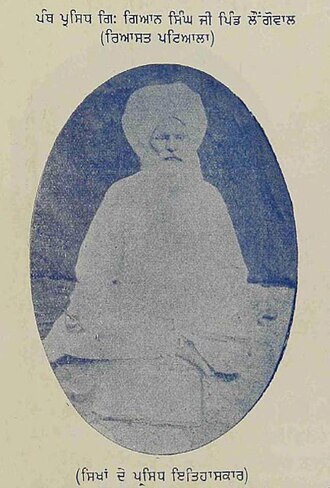
Giani Gian Singh
Giani Gian Singh (1822-1921) was a Sikh historian and chronicler, author of Twarikh Guru Khalsa and Panth Prakash.
Portrait via Wikimedia Commons.
Courses
Sikh Historical Chronicles with Giani Gian Singh
An upper-division study of the life, methods, and legacy of Giani Gian Singh (1822-1921), one of the most influential traditional Sikh historians. The course examines his major chronicles, the techniques and sources of pre-modern Sikh historiography, and the critical reading skills a modern student needs to weigh…
Panth Prakash: Sikh History 1700–1800
An advanced, semester-length study of Giani Gian Singh's Sri Panth Prakash (late 19th c.), the monumental Punjabi verse-and-prose chronicle of the eighteenth-century ਖ਼ਾਲਸਾ. The course examines the text's methodology and sources, its account of the Sikh struggle from Guru Gobind Singh Ji and Baba Banda Singh Bahadur through the era of the ਜਥੇ and ਮਿਸਲਾਂ, the two ਘੱਲੂਘਾਰੇ, the rise of the ਸਰਬੱਤ ਖ਼ਾਲਸਾ and ਗੁਰਮਤਾ, and the consolidation of sovereignty under ਮਹਾਰਾਜਾ ਰਣਜੀਤ ਸਿੰਘ. Throughout, students learn to read Panth Prakash critically as historiography — weighing its devotional purpose, oral and documentary sources, chronological reliability, and its decisive contribution to the Sikh historical imagination.
Twarikh Guru Khalsa: A Systematic Sikh History
An advanced study of ਤਵਾਰੀਖ਼ ਗੁਰੂ ਖ਼ਾਲਸਾ, Giani Gian Singh's monumental late-nineteenth-century prose history of the Ten ਗੁਰੂ Sahiban and the early ਖ਼ਾਲਸਾ. The course examines the text's scope, its synthesis of ਗੁਰਬਾਣੀ, ਜਨਮਸਾਖੀ, ਗੁਰਬਿਲਾਸ, ਰਹਿਤਨਾਮੇ, and Indo-Persian chronicle traditions, its relationship to the author's earlier verse ਪੰਥ ਪ੍ਰਕਾਸ਼, and its position within nineteenth-century ਸਿੰਘ ਸਭਾ historiography. Students engage critically with scholarly debates over the work's reliability, its narrative method, and its enduring impact on modern Sikh historical consciousness.