School within Sikhi University
Departments of the Arts
The sound and the sight of the Guru's darbar.
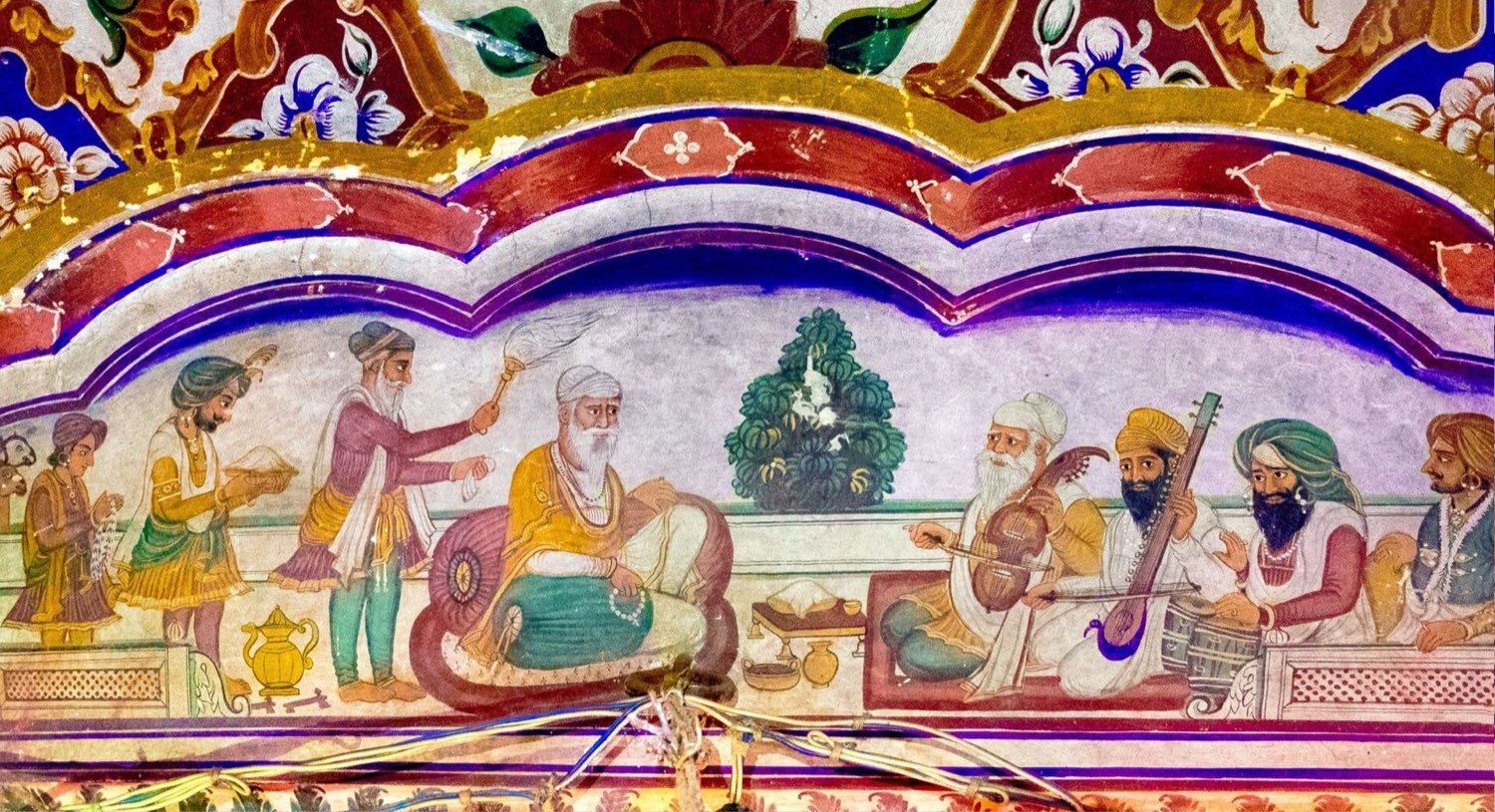
Kirtan is not a performance and Sikh art is not decoration — both are ways of holding the Shabad. This department teaches the raag and taal of Gurmat Sangeet, the tanti saaj the Gurus played, and the visual tradition: the frescoes of Darbar Sahib, the illuminated birs, the architecture of the gurdwara.
Explore the departmentSrī Guru Granth Sāhib Jī is organised by rāg — over thirty of them
Each rāg carries a feeling. Kīrtan holds the Shabad in it.
The department teaches the rāg and tāl, the tantī sāj the Gurus played, and the visual tradition alongside it — the frescoes, the illuminated biṛs, the architecture.
What you'll study
Three lines of work
Gurmat Sangeet
Raag, taal, the shabad reet, and the stringed instruments of the Guru's court.
The visual tradition
Calligraphy, manuscript illumination, the Sikh fresco, and gurdwara architecture.
Poetics
Sri Guru Granth Sahib Ji as literature — its raag structure, its imagery, its form.
Signature courses
Where to begin
Three courses that show the range of the department — an opening, a deep reading, a graduate seminar.
Faculty & sources
Taught from the authorities
Courses here are attributed to — and drawn from — the scholars whose work is definitive in the field.
Guided journeys
Follow a path, not a pile
A path runs foundations → advanced; finishing one course lights up the next.
The department curriculum
25 courses, 2 subjects
Open a subject to see its courses, foundations through graduate.
Music13 courses
Introduction to Gurmat Sangeet
A beginner-friendly survey of Gurmat Sangeet, the classical tradition of Sikh sacred music. This course explores the practice of Kirtan and its central place in Sikh worship, the system of Raags that organizes Sri Guru Granth Sahib Ji, an overview of the thirty-one main Raags, the traditional instruments and the…
Gurmat Sangeet: The History and Soul of Sikh Sacred Music
A 200-level journey through Gurmat Sangeet — the classical music tradition of Sikhi. From Guru Nanak and Bhai Mardana to the 31 raags of Gurbani, the sacred instruments, the great schools of kirtan, the colonial-era near-loss, and the modern revival.
Raag in Gurbani
An introduction to the role of Raag, the classical melodic framework of South Asian music, within Gurbani and the worship tradition of the Sikhs. This course explains what a Raag is, how Sri Guru Granth Sahib Ji is organized by Raag, the emotional character associated with the principal Raags, and how melody is…
The Raagi's Craft: Kirtan Maryada and the Discipline of Singing Gurbani
A graduate-level study of the discipline and etiquette of ਕੀਰਤਨ (kirtan), the sung devotion at the heart of Sikh worship. The course explains, in plain English, why the Sikh Rehat Maryada limits kirtan in the congregation to Gurbani and a short list of approved compositions, what this means for the
The Craft of Taal: Rhythm in Gurmat Sangeet
A graduate-level study of rhythm in Sikh devotional music. This course explains taal, the rhythmic cycle that gives kirtan its time and shape, in plain English. It covers the role of the percussion instruments the jori, the tabla, and the pakhawaj, the taals most commonly used to sing Gurbani, and t
The Raags of Sri Guru Granth Sahib: How the Scripture Sings
The Raags of Sri Guru Granth Sahib: How the Scripture Sings
Shabad Reet: The Traditional Kirtan Compositions
A graduate-level study of ਸ਼ਬਦ ਰੀਤ (shabad reet): the traditional, set musical compositions used to sing particular shabads, handed down through teacher-to-student lineages. The course explains what a reet actually is, how the old compositions (pracheen reets) were documented and preserved, and how
Tanti Saaj: The Stringed Instruments of Gurmat Sangeet
A graduate-level but plain-English study of the ਤੰਤੀ ਸਾਜ਼ (tanti saaj) — the traditional stringed instruments of Gurmat Sangeet. We trace the rabab linked to Bhai Mardana, the bowed saranda, taus and dilruba, and the percussive jori, asking why the tradition prizes these instruments, how they were n
Advanced Raag Studies: Theory, History, and Sikh Kirtan
This graduate seminar provides advanced study of the raag system as it operates in the SGGS and in the Sikh kirtan tradition, combining classical Indian music theory with musicological analysis, historical study, and critical engagement with the Gurmat Sangeet reform movement. Students develop sophisticated analytical tools for scholarly engagement with Sikh musical practice.
Comparative South Asian Music Theory and Gurbani
This graduate seminar situates the musical traditions of the SGGS within the broader landscape of South Asian and global music, applying comparative musicological methods to analyze the raag system, taal structures, and text-music relationships in Sikh kirtan against the Hindustani, Carnatic, Sufi, and bhakti musical traditions that shaped its development.
Historical Evolution of Sikh Kirtan Traditions
This graduate seminar traces the historical development of Sikh kirtan from Guru Nanak Dev Ji's founding musical ministry through the colonial reform period, the establishment of the SGPC, and the transformations of the global diaspora era. Using the Suraj Prakash and related historical sources alongside modern scholarship, students develop critical frameworks for understanding Sikh kirtan as a living, historically dynamic tradition.
Performance Practice in Gurbani Kirtan: Graduate Seminar
This graduate seminar examines the theory and practice of Sikh kirtan as a performance tradition, analyzing the relationship between musical structure, theological intention, and devotional experience. Drawing on ethnomusicology, performance studies, and Sikh theology, students develop sophisticated frameworks for understanding and evaluating kirtan performance.
Sikh Musical Manuscripts and Notation Traditions
This graduate seminar examines Sikh musical manuscripts in major South Asian and European repositories, developing paleographic competence, critically evaluating evidence for musical notation in Sikh manuscripts, and situating Sikh manuscript practice within the broader history of South Asian musical notation. Students engage with the methodological and ethical dimensions of manuscript scholarship.
Arts12 courses
Sikh Art & Architecture
An introductory survey of the visual and built heritage of the Sikh tradition. Students explore the design and meaning of the gurdwara, the history and architecture of Sri Harmandir Sahib, the art of illuminated manuscripts of Sri Guru Granth Sahib, the Sikh school of painting and fresco work, arms and material…
Sikh Sacred Architecture: The Gurdwara & Harmandir Sahib
An exploration of Sikh sacred architecture, from the meaning and function of the Gurdwara to the celebrated Harmandir Sahib at Amritsar. This course examines the core spaces of a Gurdwara, the symbolism woven into its design, the rise of a recognizable Sikh architectural style, and how built form expresses the…
Sikh Painting & Manuscript Art
A respectful survey of the visual art traditions of the Sikh world, from illuminated manuscripts and decorated copies of scripture to the painting workshops that flourished under Maharaja Ranjit Singh. The course traces how Sikh painting drew on, and departed from, the Pahari and Mughal schools; examines the gilded…
The Craft of Modern and Diaspora Sikh Art
A graduate survey of Sikh visual art from the colonial period to the present, told in plain English. We trace the rise of the Sobha Singh school of devotional Guru portraits, the mass culture of calendar art, the work of contemporary diaspora painters, the new world of Sikh comics and graphic novels
The Craft of the Gurdwara: The Architecture of the Sikh Sacred Space
A graduate-level study of how the gurdwara took shape as a building. Working from Patwant Singh's writing, the course reads the gurdwara not as a fixed style but as a form that grew out of what Sikhs actually do together: gather as sangat, eat from a shared langar, and sit before the parkash of Sri
Craft, Frescoes and Mural Art of Sikh Shrines
A graduate-level course on the wall-painting tradition of Sikh shrines, told in plain English. It studies mohrakashi fresco and gach (lime-stucco) work, the painted interiors of Sri Harmandir Sahib and other historic gurdwaras, the themes and motifs the artisans chose, who those artisans were, and w
The Craft of Illuminated Gurbani Manuscripts
A graduate-level study of the illuminated Sikh manuscript: hand-copied and decorated birs of Sri Guru Granth Sahib Ji and the Dasam Granth, ornamented nisaans, and the painted borders that surround the sacred word. The course examines materials and techniques (paper, pigment, gold), the absorbed inf
Advanced Sikh Manuscript Illumination and Paleography
This graduate seminar provides advanced training in the paleographic analysis and art-historical interpretation of Sikh illuminated manuscripts, with particular attention to the decorated Guru Granth Sahib manuscripts of the seventeenth through nineteenth centuries. Students develop skills in Gurmukhi paleography, the identification of decorative programmes and their iconographic sources, and the art-historical contextualization of Sikh manuscript production within the broader traditions of South Asian illuminated manuscript culture. The seminar draws extensively on Kamalroop Singh's archival scholarship.
Modern Sikh Art: Theory, Identity, and Global Diaspora
This graduate seminar examines the development of modern and contemporary Sikh art, focusing on the intersection of artistic practice with questions of identity, diaspora, and postcolonial self-representation. Students analyze how Sikh artists in India and the global diaspora engage Sikh visual traditions, adapt them to new media and contexts, and negotiate between the demands of the contemporary art world and the theological and communal dimensions of Sikh visual culture. The seminar situates Sikh modern art within broader debates in postcolonial art history and diaspora aesthetics.
Sacred Space in the Sikh Tradition: Advanced Architecture and Theology
This graduate seminar analyzes the sacred architecture of the Sikh tradition — gurdwaras, takhts, and related sacred spaces — through integrated art-historical, architectural, and theological analysis. Students examine how Sikh sacred space embodies theological commitments, traces historical development from the Darbar Sahib to the global diaspora gurdwara, and engages current debates in sacred architecture theory. The seminar situates Sikh sacred architecture within comparative South Asian sacred architecture scholarship and analyzes the relationship between spatial design and the theology of the divine presence.
The Guru Granth Sahib as Literature: Poetics, Raag, and Aesthetics
This graduate seminar analyzes the Sri Guru Granth Sahib as a literary work of extraordinary complexity and beauty, examining its poetic forms, multilingual registers, raag organization, imagery, and aesthetic dimensions. Students engage with classical Indian literary theory (rasa, alamkara), modern literary criticism, and the scholarship of Nikky-Guninder Kaur Singh to develop sophisticated tools for literary-critical engagement with Gurbani.
The Sikh Fresco Tradition: Advanced Critical Analysis
This graduate seminar provides advanced critical analysis of the Sikh fresco tradition, focusing on the extensive mural programmes of gurdwaras, havelis, and palaces from the eighteenth through early twentieth centuries. Students develop skills in iconographic analysis, workshop attribution, the study of Punjabi fresco technique, and the theological interpretation of narrative and devotional image programmes. The seminar situates the Sikh fresco tradition within the broader context of South Asian wall painting and engages current debates in conservation and cultural heritage.
Start where your question is
You do not need a background, an application, or a fee. Pick a course and begin — the department is here whenever you want to go deeper.
