School within Sikhi University
Department of Theology
Gurmat as a system of thought — and a way of life.
This department reads the Guru's word as the Guru intended it to be read: not as data to be catalogued, but as ਗੁਰਮਤਿ — a discipline that reshapes the reader. Every course begins in the text and stays there, working outward to the questions a Sikh actually asks.
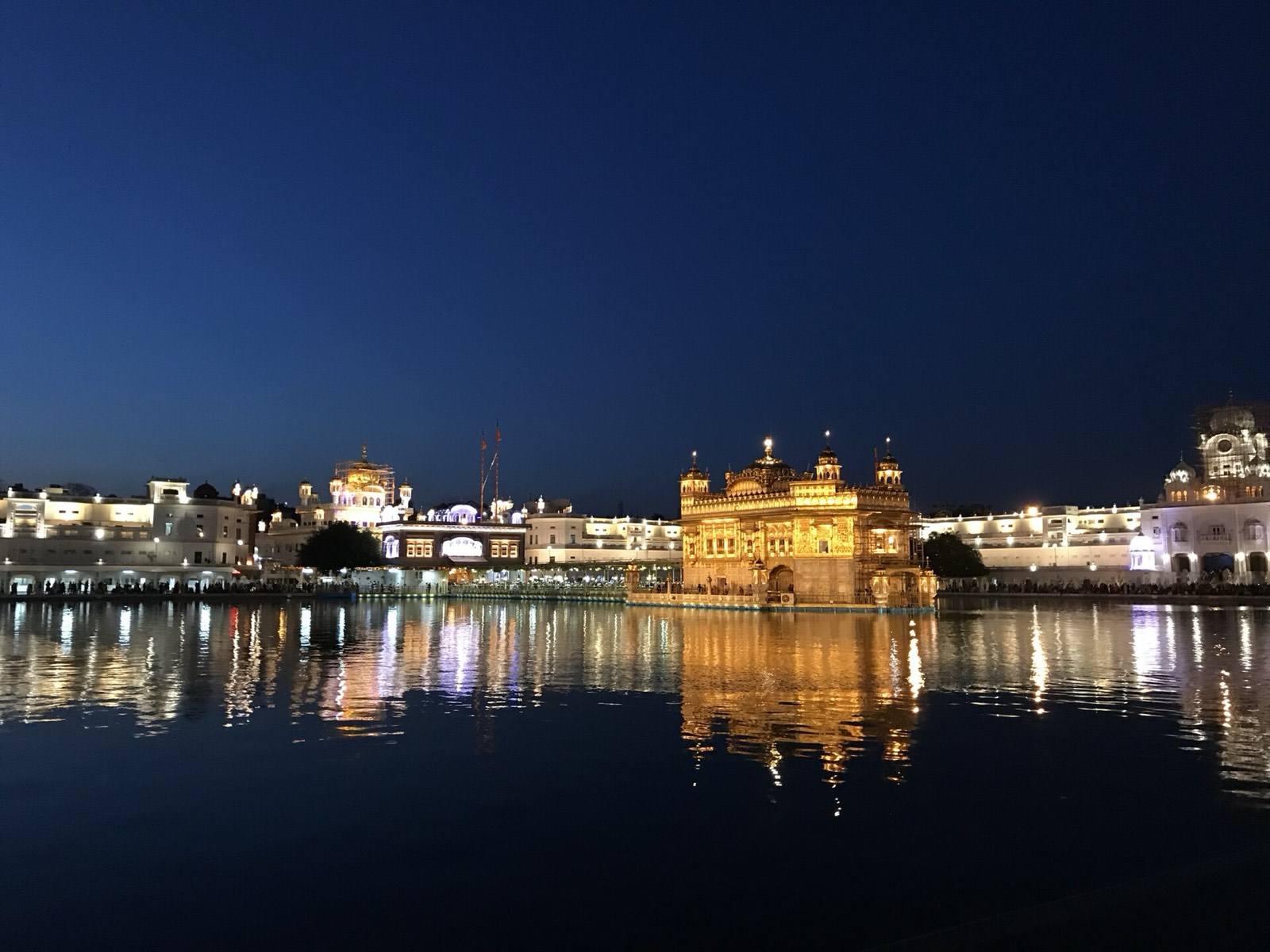
Explore the departmentPhotograph: Golden Temple, Amritsar at night 02 — Slyronit, CC BY-SA 4.0, via Wikimedia Commons
Everything in this department begins with one verse
ੴਸਤਿ ਨਾਮੁਕਰਤਾ ਪੁਰਖੁਨਿਰਭਉਨਿਰਵੈਰੁਅਕਾਲ ਮੂਰਤਿਅਜੂਨੀਸੈਭੰਗੁਰ ਪ੍ਰਸਾਦਿ ॥
The Mūl Mantar — the opening of Srī Guru Granth Sāhib Jī, Aṅg 1. The theology, the metaphysics, the ethics of the whole tradition unfold from these words.
What you'll study
Three lines of work
The word
The theology of Sri Guru Granth Sahib Ji — Naam, Hukam, Shabad, the nature of the Divine and the self.
The practice
Simran, seva, Rehat and Maryada — how the theology is lived, not just believed.
The conversation
Sikhi in dialogue with philosophy, other faiths, and the questions of the age.
Signature courses
Where to begin
Three courses that show the range of the department — an opening, a deep reading, a graduate seminar.
Faculty & sources
Taught from the authorities
Courses here are attributed to — and drawn from — the scholars whose work is definitive in the field.
Guided journeys
Follow a path, not a pile
A path runs foundations → advanced; finishing one course lights up the next.
- Sacred Granths: Beyond the Guru Granth SahibA deep exploration of the Dasam Granth, Sarbloh Granth, and Pran Sangli — their history, banis, theology, and scholarly debates.13 courses →
- Spiritual PracticeBuild a daily practice: Naam, Nitnem, Seva, and the spiritual path.14 courses →
- Understanding Gurbani through TeekasLearn how the great commentaries (teekas) open up the meaning of Gurbani.10 courses →
- Foundations of SikhiStart here: the core beliefs, the scripture, the Gurus, and Sikh identity.11 courses →
The department curriculum
217 courses, 7 subjects
Open a subject to see its courses, foundations through graduate.
Theology88 courses
Introduction to Gurmat (Sikh Theology)
A rigorous yet accessible introduction to Gurmat, the theology of the Guru's teachings, covering the nature of the Divine, the Shabad Guru, the path of devotion, grace and effort, ethics and equality, and the meaning of liberation.
The Mool Mantar: Sikh Theology in One Breath
A phrase-by-phrase study of the Mool Mantar — the opening of Sri Guru Granth Sahib that names every attribute of Waheguru: one, true, creator, fearless, without enmity, timeless, unborn, self-existent, and known by grace.
Understanding Ardas: Sant Waryam Singh Ratwara Sahib's Teachings
An introduction to Ardas (ਅਰਦਾਸ), the Sikh prayer of supplication, drawing on Sant Waryam Singh Ratwara Sahib's katha — its history, three-part structure, and how to pray with sincerity in daily life.
Introduction to Sri Guru Granth Sahib Ji
A college-level introduction to Sri Guru Granth Sahib Ji, the eternal living Guru of the Sikhs. The course examines how the scripture was compiled by Guru Arjan Dev Ji and completed under Guru Gobind Singh Ji, the community of voices it gathers (Gurus, Bhagats, and Bhatts), its arrangement by Raag, its script and…
The Five Ks and Sikh Identity
An academic introduction to the Panj Kakaar (the Five Ks) and the formed Sikh identity of the Khalsa, taught in the voice of the Rehat tradition associated with Bhai Chaupa Singh Chhibber, author of one of the earliest Rehatnamas (codes of conduct). The course studies each of the five articles of faith…
Gurmat Katha
This course studies the art of ਕਥਾ (oral discourse) and the core Gurmat themes that shaped the teaching of Giani Sant Singh Maskeen, one of the best-known Sikh expositors of the twentieth century. Rather than reproducing his words, the course examines his method: how he opened a line of Gurbani, built a moral…
Understanding the Mool Mantar
An academic, term-by-term study of the Mool Mantar, the foundational statement that opens Sri Guru Granth Sahib Ji at Ang 1. The course explains each phrase in plain English, situates it within classical and modern Sikh scholarship, and shows how these few words frame the whole of Gurbani and shape Sikh life.…
Anand Sahib: The Song of Bliss — A Deep Study
This course offers a deep study of Anand Sahib — the forty-stanza composition by Guru Amar Das Ji that has become one of the most central texts in daily Sikh practice. Students will examine the composition's themes of spiritual bliss, its poetic structure, its place in the Sri Guru Granth Sahib Ji, the theological concepts it develops, and its role in Sikh liturgical practice from birth to death.
Death, the Soul, and Sachkhand: The Sikh Understanding
An intermediate theology course on the Sikh understanding of death as a peaceful transition: the soul (ਆਤਮਾ), Sachkhand, reincarnation reframed, grief, and Antam Sanskaar practices.
Dr Daljit Singh Jawa: English Translation of SGGS
An intermediate study of Dr. Daljit Singh Jawa's accessible English translation of Sri Guru Granth Sahib, available on Sikh Archive. The course examines the translator's life and aims, his readable line-by-line method, how he renders ਬ੍ਰਜ ਭਾਸ਼ਾ and Sanskritic vocabulary, and how his work sits alongside the translations of Manmohan Singh, Gopal Singh, and H. S. Singha and Mansukhani. Students learn the deep difficulties of carrying ਗੁਰਬਾਣੀ into English and a disciplined, reverent way to use any translation as a doorway, never a replacement, for the original.
Guru Angad Dev Ji's Saloks: Wisdom in Few Words
This course examines the sixty-two saloks composed by Guru Angad Dev Ji and preserved in the Sri Guru Granth Sahib Ji. Saloks are brief, aphoristic verses in which profound spiritual and moral wisdom is concentrated into a few lines. Students will engage closely with the themes, imagery, and theological teaching of these compositions, understanding them in their scriptural context and as expressions of the Second Guru's spiritual vision.
Guru Granth Darpan: Prof Sahib Singh's Life Work
A comprehensive intermediate study of Prof Sahib Singh (1892-1977) and his monumental ten-volume ਸ੍ਰੀ ਗੁਰੂ ਗ੍ਰੰਥ ਸਾਹਿਬ ਦਰਪਣ, the standard Punjabi word-for-word commentary (ਟੀਕਾ) on the ਆਦਿ ਗ੍ਰੰਥ. The course traces his improbable journey from a Hindu Pohuwindi family to becoming the foremost grammarian of ਗੁਰਬਾਣੀ, examines the grammatical methodology that anchors the Darpan, and evaluates why his ਟੀਕਾ became the most trusted Punjabi commentary among Sikh scholars, ਟਕਸਾਲ traditions, and ordinary ਸੰਗਤ alike.
Guru Har Rai Ji and the Preservation of Gurbani
This course examines Guru Har Rai Ji's role as a guardian of the Gurbani's integrity, focusing on the theological principles that governed his approach to scripture, the Ram Rai episode as a test case of these principles, and the broader Sikh tradition of scriptural preservation. Students explore the Sikh understanding of the Shabad Guru and the responsibilities it places on each generation to protect and transmit the divine Word unchanged.
Guru Nanak Chamatkar: Bhai Vir Singh's Portrait of the First Guru
An intermediate study of Bhai Vir Singh's Guru Nanak Chamatkar: its devotional method, its use of janam-sakhi, Gurbani and Bhai Gurdas, the life and Udaasis of Guru Nanak, and how to read it critically today.
Hukam: The Divine Order That Governs All Existence
A study of Hukam (ਹੁਕਮੁ), the divine order at the heart of Japji Sahib — what it means, how it relates to free will, how it differs from Qadar and karma, and how it is lived through Bhaana, Ardas, and Sarbat da Bhala.
Jap Sahib, Swayye, and Benti Chaupai: The Daily Khalsa Banis
Three compositions from the Dasam Granth stand at the heart of Khalsa daily practice: Jap Sahib, the Swayye (Savaiye), and Benti Chaupai. This course provides close textual analysis of each bani, examining their literary structure, theological content, and devotional function within the Nitnem. Students engage with the original texts and their scholarly interpretations to understand why these compositions were chosen for daily recitation and Amrit Sanchar.
Japji Sahib: A Deep Reading of the Opening Prayer
A section-by-section study of Japji Sahib, Guru Nanak's foundational prayer that opens Sri Guru Granth Sahib Ji: the Mool Mantar, all 38 pauris, and core concepts like Hukam, Nadar, Sach, and the Khands.
Miri-Piri: The Two Swords and a New Sikh Identity
This course provides a deep theological and historical examination of the Miri-Piri doctrine introduced by Guru Hargobind Sahib Ji in 1606. Students explore the conceptual foundations of this doctrine in earlier Gurbani, its institutional expression in the two swords and the Akal Takht, and its enduring significance for Sikh political theology and identity.
Nanded, the Final Hukam, and the Eternal Guruship of the Granth and Panth
This course examines the final years of Guru Gobind Singh Ji's life at Nanded in the Deccan, his encounter with Banda Singh Bahadur, the stabbing incident and its aftermath, and the momentous final Hukam (divine command) that conferred eternal Guruship on the Sri Guru Granth Sahib Ji and the Khalsa Panth. The course explores the theological significance of this transition and its enduring consequences for Sikh identity, ecclesiology, and daily practice.
Reading Japji Sahib
An academic study of Japji Sahib, the foundational composition of Guru Nanak Dev Ji that opens Sri Guru Granth Sahib Ji at Ang 1. This course examines the structure and themes of the bani rather than reproducing or paraphrasing its lines: the Mool Mantar and its naming of the Divine; the critique of empty ritual;…
Sukhmani Sahib: The Jewel of Peace — A Deep Study
Sukhmani Sahib — 'Jewel of Peace' — is one of the most beloved compositions in the Guru Granth Sahib Ji. Composed by Guru Arjan Dev Ji in Raag Gauri, it consists of 24 ashtapadis (eight-stanza units) each preceded by a slok, exploring the nature of Waheguru, the path to liberation, and the character of the ideal Sikh devotee (the Brahm-gyani). This course provides a structured, lesson-by-lesson exploration of the major themes and theological content of Sukhmani Sahib, drawing on Prof. Sahib Singh's Darpan commentary and examining the practical significance of this composition for daily Sikh devotional life.
The Concept of Naam in Sikhi
An expanded academic study of ਨਾਮ (the Divine Name), one of the most central ideas in Sikh theology. The course moves from definition to lived practice: it examines what Naam means beyond an ordinary label, how the disciplines of ਸਿਮਰਨ (loving remembrance) and Naam Japna operate, and how Naam relates to ਸ਼ਬਦ (the…
The Dasam Granth: History, Manuscripts, and the Scholarly Landscape
The Dasam Granth is a large scriptural compilation attributed to Guru Gobind Singh Ji (1666–1708), the tenth Sikh Guru, comprising approximately 1,428 pages of diverse literary and devotional compositions. This course surveys the manuscript history, the canonical debates, and the major scholarly positions that have shaped how Sikhs and academics understand this text. Students engage with the primary compositions, the historical transmission of manuscripts, and the institutional processes by which the Granth received its current form.
The Lavan: Marriage, Love, and Union with Waheguru
The Lavan — four stanzas composed by Guru Ram Das Ji in Raag Suhi — form the scriptural basis of the Sikh wedding ceremony (Anand Karaj) and one of the most profound theological statements in the Guru Granth Sahib Ji on the soul's journey toward union with Waheguru. This course provides a deep study of each of the four Lav, examining the textual meaning, spiritual symbolism, and practical significance of this composition. Students will explore how Guru Ram Das Ji uses the metaphor of marriage to describe stages of spiritual progression, and why the Lavan remain central to Sikh devotional and ceremonial life today.
The Santhya Tradition: Correct Reading of Gurbani
An intermediate study of ਸੰਥਿਆ — the living oral tradition by which correct ਉਚਾਰਣ (pronunciation), ਅਰਥ (meaning), and ਲਗਾਂ-ਮਾਤਰਾਂ (vowel-sign reading) of Gurbani are transmitted from teacher to student. The course traces the tradition from the ਦਮਦਮੀ ਬੀੜ recension at ਦਮਦਮਾ ਸਾਹਿਬ through the ਟਕਸਾਲ and ਨਿਹੰਗ schools, examines the grammar of Sri Guru Granth Sahib Ji, and equips students to understand how Gurbani is meant to be read and learned with precision and humility.
The Sarbloh Granth: History, Attribution, and Manuscript Tradition
The Sarbloh Granth (Iron Scripture) is a voluminous text of approximately 1,344 pages attributed in Nihang Sikh tradition to Guru Gobind Singh Ji. This course examines its manuscript history, the circumstances of its publication, the nature of scholarly debates surrounding its attribution, and its place within living Khalsa praxis.
Understanding Teekas: How Gurbani Has Been Explained
This overview course introduces the tradition of the teeka (commentary or exegesis) and shows how commentaries have helped Sikhs read and understand Gurbani for more than a century. It explains what a teeka is and why a learner often needs help with older vocabulary, grammar, and context. It surveys the main…
Vaaran Bhai Gurdas: A Key to the Guru Granth Sahib
An intermediate course on the forty ਵਾਰਾਂ of ਭਾਈ ਗੁਰਦਾਸ ਜੀ — the scribe of the Adi Granth, first ਜਥੇਦਾਰ of the Akal Takhat, and the poet whose work Guru Arjan Dev Ji called ਗੁਰਬਾਣੀ ਦੀ ਕੁੰਜੀ, the key to Gurbani. Students study his biography, the structure and language of the Vaaran and Kabitt-Savaiye, and the theological framework through which he interprets ਗੁਰਮਤਿ for the ordinary ਗੁਰਸਿੱਖ.
Vaaran Bhai Gurdas: Social Ethics and Community Life
This intermediate course examines Vaars 26-40 of ਵਾਰਾਂ ਭਾਈ ਗੁਰਦਾਸ as a social charter for the early Sikh community. Reading ਭਾਈ ਗੁਰਦਾਸ as the first authoritative interpreter of ਗੁਰਬਾਣੀ, students explore how the Vaars articulate a revolutionary social ethic: the rejection of ਜਾਤ-ਪਾਤ, the dignity of women, the economy of ਲੰਗਰ and ਸੇਵਾ, the ethics of the Sikh merchant and householder, and the institutions—the ਧਰਮਸਾਲ, the ਸੰਗਤ, and the ਗ੍ਰੰਥੀ—that bound the ਪੰਥ together. The course treats the Vaars not as abstract poetry but as a lived constitution for the ਗੁਰਮੁਖ within the ਸਾਧ ਸੰਗਤ.
Vaaran Bhai Gurdas: The Formation of the Sikh Panth
An intermediate, semester-length study of the first six Vaars of Bhai Gurdas Ji — the writings Guru Arjan Dev Ji called the ਕੁੰਜੀ (key) to Sri Guru Granth Sahib. Reading these Vaars as both devotional poetry and the earliest Sikh historiography, the course traces how the ਪੰਥ was formed: the cosmic mission behind Guru Nanak Sahib's coming, the gift of ਗੁਰਮੁਖੀ under Guru Angad Dev Ji, ਸੰਗਤ and ਪੰਗਤ under Guru Amar Das Ji, the founding of Amritsar under Guru Ram Das Ji, the compilation of the Adi Granth under Guru Arjan Dev Ji, and the doctrine of ਮੀਰੀ ਪੀਰੀ under Guru Hargobind Sahib.
ੴ ਸਤਿ ਨਾਮੁ: The Mool Mantar as Complete Theology
The ਮੂਲ ਮੰਤਰ is the theological seed (ਬੀਜ ਮੰਤਰ) from which the entire ਸ੍ਰੀ ਗੁਰੂ ਗ੍ਰੰਥ ਸਾਹਿਬ unfolds. Standing at the very opening of the scripture, before ਜਪੁ ਜੀ ਸਾਹਿਬ and before every ਰਾਗ, it functions as a compressed and complete statement of Sikh doctrine concerning the nature of ਅਕਾਲ ਪੁਰਖ. This intermediate-level course examines each term of the ਮੂਲ ਮੰਤਰ — ੴ, ਸਤਿ ਨਾਮੁ, ਕਰਤਾ ਪੁਰਖੁ, ਨਿਰਭਉ, ਨਿਰਵੈਰੁ, ਅਕਾਲ ਮੂਰਤਿ, ਅਜੂਨੀ, ਸੈਭੰ, and ਗੁਰ ਪ੍ਰਸਾਦਿ — not as isolated attributes but as a single, integrated theological architecture. Each lesson reads a term against the religious and philosophical inheritance of fifteenth- and sixteenth-century Punjab, showing how ਗੁਰੂ ਨਾਨਕ ਸਾਹਿਬ's formulation simultaneously affirms a radical monotheism and quietly displaces competing doctrines of avatar, ritual mediation, and fear-based devotion. Drawing on the commentarial tradition of ਭਾਈ ਵੀਰ ਸਿੰਘ, the ਫਰੀਦਕੋਟ ਟੀਕਾ, and modern academic scholarship, students learn to treat the ਮੂਲ ਮੰਤਰ as a complete theology that is also a lived ਸਿਮਰਨ. By the course's end, a student should be able to expound any single term and demonstrate how it depends on and illuminates the others.
ਆਤਮਾ and ਜੋਤਿ: The Soul Beyond All Physical Categories
This course examines a central theological claim of the ਸ੍ਰੀ ਗੁਰੂ ਗ੍ਰੰਥ ਸਾਹਿਬ: that the divisions humans impose on one another — gender, caste, race, and the shape and condition of the body — are ਮਾਇਆ, temporary illusions that obscure the one reality. Drawing on verified passages from ਜਪੁਜੀ ਸਾਹਿਬ, ਸੁਖਮਨੀ ਸਾਹਿਬ, ਅਨੰਦ ਸਾਹਿਬ and the wider Granth, and reading them through the disciplined exegetical method of Prof. Sahib Singh, students learn that the ਜੋਤਿ within every being is the only identity that stands before ਅਕਾਲ ਪੁਰਖ. We trace the movement of Gurbani thought from ਹਉਮੈ — the ego that manufactures separation — toward the recognition of ਇਕੁ ਨੂਰ, the single Light from which all creation springs. Across twelve lessons the course builds from theology to ethics to daily ਨਾਮ ਸਿਮਰਨ practice, so that the learner does not merely understand that the soul transcends the body but begins to see other people as the Gurus saw them…
Asa Di Var: Morning Prayer and Social Vision
This course offers a comprehensive study of Asa Di Var, Guru Nanak's ballad in Asa raag that is sung as the morning prayer in gurdwaras worldwide. The course examines each of the 24 pauris and their accompanying slokas, exploring the composition's powerful social critique of caste, ritual, and religious hypocrisy alongside its positive vision of truthful living, honest labor, and the community of the Naam. Special attention is given to the composition's structure as a var (ballad) and its relationship to the Bhagat bani slokas interspersed throughout.
Chandi Di Var and Chandi Charitar: Heroic Poetry and the Divine Feminine
The Dasam Granth contains three major compositions celebrating the divine feminine warrior-power: Chandi Di Var, Chandi Charitar I, and Chandi Charitar II. This course examines these compositions as theological reinterpretations of classical Hindu narrative, analyzing how Guru Gobind Singh transforms the Devi Mahatmya tradition into a vehicle for Sikh monotheism and the spiritual rationale for Khalsa heroism. Students engage with the fetched source texts and scholarly analysis to understand the theology of divine power operating through heroic agency.
Compiling the Adi Granth: Guru Arjan Dev Ji's Vision, Method, and Universality
In 1604, Guru Arjan Dev Ji accomplished one of the most extraordinary acts in the history of world religion: the compilation of an interfaith sacred scripture that included the compositions of Sikh Gurus, Hindu bhagats, a Muslim saint, and others — all organized not by tradition or author but by musical mode (raag). This course studies the vision, methodology, and theological significance of the Adi Granth's compilation, examining its unique character as a universalist scripture, its editorial principles, the sources it drew on, and its subsequent elevation to the status of eternal Guru.
Guru Amar Das Ji's Gurbani: Themes of Equality and Liberation
This advanced course offers a thematic study of Guru Amar Das Ji's extensive Gurbani — over 900 compositions in the Sri Guru Granth Sahib Ji — with particular focus on the themes of equality, liberation, the critique of false religion, and the vision of the ideal spiritual community. Students will engage closely with selected compositions and with scholarly commentary, developing skills of textual analysis and theological interpretation.
Guru Arjan Dev Ji's Gurbani: Themes, Rasas, and Message
Guru Arjan Dev Ji composed 2,218 hymns in the Guru Granth Sahib Ji — the largest contribution of any single author. His bani spans multiple raags and poetic forms, ranging from the deep philosophical inquiry of Sukhmani Sahib to the joyful celebration of the divine presence, from intense virha (longing) to settled sehaj (equipoise). This course provides a thematic study of Guru Arjan Dev Ji's Gurbani, examining its major theological ideas, its use of literary rasas (emotional registers), and its enduring message for Sikh devotional life.
Guru Ram Das Ji's Gurbani: Devotion, Longing, and Raag
This course undertakes a systematic study of the Gurbani composed by Guru Ram Das Ji across multiple raags in the Guru Granth Sahib Ji. Guru Ram Das Ji composed more than 600 hymns, making him one of the most prolific contributors to the scripture. His bani is marked by intense devotional longing (virha), radical humility, and a deep sense of the soul's dependence on the Guru's grace. Students will explore major compositions including the Lavan, the Chhant compositions, and select sabads across raags, developing an understanding of both the theological content and the musical context of Guru Ram Das Ji's spiritual poetry.
Japji Sahib: A Deep Study
This course offers a deep theological and literary study of Japji Sahib, Guru Nanak's foundational composition that opens the Guru Granth Sahib and is recited daily by Sikhs. Each of the 38 pauris (stanzas) and the Mool Mantar are examined for their theological content, linguistic structure, and place in Sikh spiritual practice. The course draws on Prof. Sahib Singh's authoritative commentary and grounds Japji's teaching in Guru Nanak's broader theological vision.
Mythology, Heroic Narrative, and the Warrior-Saint Ideal in the Sarbloh Granth
The Sarbloh Granth contains extensive mythological narratives — tales of divine combat, the slaying of demonic forces, and the triumph of righteousness — that serve a theological purpose: modeling and grounding the Khalsa warrior-saint ideal. This course examines the mythological content of the Sarbloh Granth, its sources in the Puranic tradition, and how the Gurmat lens transforms that tradition into a theology of sovereign service.
Opening the Word: Dr. Surinder Singh Kohli and Gurbani in English
This course studies the work of Dr. Surinder Singh Kohli, a leading academic interpreter who carried the message of Sikh scripture into clear English. Rather than reproducing his texts, the course examines how his multi-volume series Guru Granth Sahib Speaks and his other English studies of Gurbani opened the…
Sarbloh Japji Sahib: A Deep Study
The Sarbloh Japji Sahib is a composition attributed to Guru Gobind Singh Ji that opens with an extended meditation on creation through the single Creator, drawing on cosmological frameworks similar to but distinct from the Japji Sahib of Guru Nanak Dev Ji. This course provides close textual reading of the Sarbloh Japji, examining its theology of creation, its devotional imperatives, and its place within the extended Nitnem of the Nihang Khalsa.
The Manglacharan and Opening Invocations of the Sarbloh Granth
The Manglacharan of the Sarbloh Granth is an extended opening invocation of extraordinary breadth, moving through praise of Waheguru manifested as Maja Lakshmi, Bhavani, Narayan, Kali, Sarasvati, and Ganpati before arriving at the foundational monotheistic declaration. This course provides close textual reading of the Manglacharan's structure, theology, and literary technique as preserved in the published edition of the Buddha Dal.
The Zafarnama: Guru Gobind Singh's Letter of Victory
The Zafarnama — the Letter of Victory — is Guru Gobind Singh's Persian epistle to Mughal Emperor Aurangzeb, composed in the aftermath of the battles of Chamkaur and Muktsar and the martyrdom of all four of the Guru's sons. This course examines the Zafarnama as historical document, political epistle, theological statement, and literary masterwork, drawing on the fetched source text. Students analyze how a militarily defeated man claims moral and spiritual victory through the power of divine truth and poetic argument.
ਕੁਦਰਤਿ and ਹੁਕਮਿ: Gurbani's Theology of Creation
Sri Guru Granth Sahib contains one of the world's most sophisticated theologies of creation. This 250-level course undertakes the exegetical work of systematically studying what Gurbani actually says about ਕੁਦਰਤਿ (the created order as divine expression), ਹੁਕਮਿ (the divine command and law through which creation operates), and humanity's place within that order. Across twelve lessons we move from the cosmology of Japji Sahib through the panentheism implicit in Gurbani's vision of nature, into the five elemental building-blocks of the cosmos, the ਜੋਤਿ (divine light) that animates every creature, and the ethical consequences that follow: trusteeship over ownership, the ecological vice of ਅਹੰਕਾਰ, and the ecological virtue of ਸੰਤੋਖ. We then widen the canon to consider the Dasam Granth, the Sarbloh Granth, and the Vaaran of Bhai Gurdas, before closing with the implications of this theology for contemporary environmental ethics and action. The aim is not advocacy but disciplined reading — letting the Guru's own words shape a coherent account of why creation matters, what it reveals about the One, and how human beings are called to live within it…
Authenticity, Scholarly Debates, and Khalsa Practice Today
This course examines the contemporary state of scholarly and community debates about the Sarbloh Granth's authenticity, considers what is at stake in these debates for the living Khalsa community, and offers students tools for engaging responsibly with contested sacred texts. It bridges historical-critical methodology with honest theological engagement, modeling the kind of integrative scholarship that Sikh studies needs.
Bani Steeks with Bhagat Jaswant Singh (Daudar)
This course studies the steek (commentary) and arth (meaning) tradition through the published Punjabi works of Bhagat Jaswant Singh (Daudar). His writings give line-by-line explanations of selected banis from Sri Guru Granth Sahib and offer practical guidance on correct reading, including vishraam (where to pause).…
Charitropakhyan: Narratives, Ethics, Gender, and Scholarly Debate
The Charitropakhyan is the most debated section of the Dasam Granth: a collection of 405 narrative tales addressing themes of ethics, statecraft, gender, deception, and moral discernment. This course examines the Charitropakhyan's literary tradition, its relationship to classical South Asian narrative, the range of scholarly positions on its attribution and theological significance, and the ongoing community debates about its canonical status.
Crossing the Worldly Ocean: Liberation in the Nirmala Commentary Tradition
This course studies the idea of liberation as the crossing of the worldly ocean (ਭਵ ਸਾਗਰ) as it is taught within the Nirmala commentary tradition of Sikh learning. Taking the metaphor of a 'bridge over the ocean of existence' (Bhav Sagar Setu) as its organizing image, the course examines how Nirmala scholars read…
Defending Gurmat: The Doctrinal Writings of Sodhi Teja Singh
This course studies the doctrinal and apologetic writings of the Sikh author Sodhi Teja Singh, whose works set out to explain and defend Gurmat, the way of life taught by the Guru. Reading his Gurmat exposition alongside his argumentative texts such as Gur-Shabad-Sidhi, students learn how he answers questions about…
Explaining Gurbani: The Steek Tradition of Sant Jagjit Singh Harkhowal
This advanced course studies the way Sant Jagjit Singh Harkhowal explains Gurbani in his body of steeks (text-with-commentary works) preserved in the collection. It treats his method as a worked example of the wider Sikh exegetical tradition: how a teacher takes a bani, gives word-by-word meaning, then opens out…
Faridkot Wala Teeka: The Royal SGGS Commentary
An advanced study of the monumental ਫਰੀਦਕੋਟ ਵਾਲਾ ਟੀਕਾ — the first complete, officially-sanctioned commentary on the entire ਸ੍ਰੀ ਗੁਰੂ ਗ੍ਰੰਥ ਸਾਹਿਬ. Commissioned by ਰਾਜਾ ਬਿਕ੍ਰਮ ਸਿੰਘ of ਫਰੀਦਕੋਟ and completed under ਗਿਆਨੀ ਬਦਨ ਸਿੰਘ in the late nineteenth century, this nine-volume ਬ੍ਰਜ ਭਾਸ਼ਾ work shaped a generation of ਨਿਰਮਲਾ exegesis. The course traces its patronage, its team of scholars, its hermeneutical method, its ਵੇਦਾਂਤ-inflected doctrinal stance, its place within the wider history of Gurbani ਟੀਕਾ, and the controversies it provoked in the ਸਿੰਘ ਸਭਾ era. Students learn to read the Teeka critically, to weigh it against later commentaries, and to use the seven-language digital editions now hosted on the Sikh Archive.
Females in the Punj Pyare: History, Akal Takht, and Gurbani on Gender in Sikh Ceremony
This 300-level seminar offers an honest, balanced examination of one of the most debated questions in contemporary Sikh practice: whether women may serve among the ਪੰਜ ਪਿਆਰੇ (the Five Beloved Ones) who administer ਅੰਮ੍ਰਿਤ ਸੰਚਾਰ. The course presents four streams of evidence side by side — the historical record of ਵੈਸਾਖੀ 1699 and the centuries that followed, the institutional positions of the ਅਕਾਲ ਤਖ਼ਤ and the Sikh Rehat Maryada, the theology of gender equality embedded in ਸ੍ਰੀ ਗੁਰੂ ਗ੍ਰੰਥ ਸਾਹਿਬ, and the scholarly debate between traditional (ਟਕਸਾਲ) and reformist-feminist Sikh thinkers. Following the methodology of ਸਾਂਝੀਵਾਲਤਾ (shared belonging) and respectful ਵਿਚਾਰ (deliberation), the course deliberately takes no side. Students learn to distinguish ਗੁਰਬਾਣੀ from ਰਹਿਤ, theology from history, and conviction from evidence, so that they may participate in the ਪੰਥ's ongoing collective discernment with rigor, humility, and ਪਿਆਰ…
Gurbani Exegesis with Prof. Sahib Singh
An author-as-professor course about Prof. Sahib Singh (1892-1977), among the most influential interpreters of Sri Guru Granth Sahib. The course studies who he was, the grammar-based method he built for reading Gurbani, his ten-volume Sri Guru Granth Sahib Darpan, his companion Gurbani Viakaran, his study of the…
Guru Tegh Bahadur Ji's Saloks: A Deep Study of Detachment and Courage
This course provides a rigorous theological and textual analysis of the fifty-seven Saloks of Guru Tegh Bahadur Ji in the Guru Granth Sahib. Drawing on Prof. Sahib Singh's exegetical method and Sikh theological scholarship, students engage deeply with the Guru's teachings on bairag (detachment), impermanence, the nature of the mind, and the fearless courage that flows from genuine surrender to Waheguru.
Japji Sahib: A Puratan Teeka with Sant Waryam Singh Ji
This course studies Japji Sahib, the opening bani of Sri Guru Granth Sahib Ji, through the lens of the puratan (traditional) teeka by Sant Waryam Singh Ji of Ratwara Sahib. A teeka is a line-by-line exposition that opens up the meaning of bani for ordinary readers. Rather than reproducing the bani at length, the…
Katha Pramaan Sagar — Part 2: Spiritual Pramaan and Gurbani Evidence
Part 2 of the Katha Pramaan Sagar series: how Giani Mal Singh marshals Gurbani as evidence (pramaan) for Sikh spiritual principles — Waheguru's nature, Naam, Bhagti, the soul, death, and liberation.
Reading Akal Ustat: Mehta's Vision of the Divine
An advanced study of Dr. Gurcharan Singh Mehta's commentary and philosophical reflection, Akal Ustat Paath Vyakhya Atey Vichar Darshan, which expounds Akal Ustat, a composition attributed to Guru Gobind Singh Ji in the Dasam Granth. The course follows Mehta's method of close reading and his account of how the text…
Reading Jaap Sahib with the Nirmala Tradition: Sant Kartar Singh's Arth Prabodh
This course studies Jaap Sahib, a morning composition (bani) attributed to Guru Gobind Singh Ji within the Dasam Granth, through the lens of the Nirmala commentary (tika) tradition and the exegetical work titled 'Jaap Sahib Arth Prabodh.' Students learn how Nirmala scholars read the bani, how they explain its names…
Reading Japji Sahib with the Udasi Lens: Harnam Daas Udasi's Sateek Tradition
This upper-level seminar studies the practice of sateek (verse-by-verse commentary) as applied to Japji Sahib, the opening composition of the Sri Guru Granth Sahib found at Ang 1. Working from the Udasi exegetical tradition associated with Harnam Daas Udasi's commentarial method, students learn how Udasi expositors…
Reading the Dasam Granth: The Textual Scholarship of Dr. Kamalroop Singh
This course introduces students to the academic study of the Dasam Granth (ਦਸਮ ਗ੍ਰੰਥ) through the scholarship of Dr. Kamalroop Singh, a contemporary researcher known for his work on Sikh manuscripts and the writings attributed to Guru Gobind Singh. Students learn what the Dasam Granth is, how scholars examine its…
Sant Hari Singh Randhawa and the Panch Granthavali Steek: Reading a Commentary on a Gathered Collection
A graduate-level study of Sant Hari Singh Randhawa's Panch Granthavali Steek, a commentary on the Panj Granthavali collection. The course explains, in plain English, what a 'panch granthavali' gathers, why several short granths are bound together, and how a steek (running commentary) opens such a collection for a…
Santhya and Rehat in the Damdami Taksal Tradition
This course studies two pillars of teaching associated with Giani Gurbachan Singh Bhindranwale, an early head of the Damdami Taksal: santhya, the careful and correct oral reading of Gurbani, and rehat, the Sikh code of conduct. Students learn how the Taksal preserves the pronunciation, pause, and meaning of Sri…
Sidh Gosht: Guru Nanak's Dialogue with the Siddhs
This advanced course offers a close reading of the Sidh Gosht, Guru Nanak's extended philosophical dialogue with the Nath Siddhs preserved in the Guru Granth Sahib in Ramkali raag. Students examine each of the composition's pauris for their theological arguments about liberation, the Guru, the householder path, the nature of the self, and the relationship between human effort and divine grace. The course requires familiarity with Nath yogi terminology and Sikh theological concepts introduced in earlier courses.
The Dasam Granth and Guru Gobind Singh Ji's Literary and Intellectual Legacy
This course provides a comprehensive theological and literary study of the Dasam Granth, examining the major compositions attributed to Guru Gobind Singh Ji and the scholarly debates surrounding their authorship, purpose, and canonical status. Students engage with the Dasam Granth as both a theological document and a literary masterwork, examining how it deploys Indic and Persianate literary traditions in the service of a distinctive Khalsa theology. The course draws on the scholarly edition of the Dasam Granth and critical Sikh studies scholarship.
The Philosophy of Sarbloh: Iron, Sovereignty, and the Eternal Form
This advanced course examines the philosophical core of the Sarbloh Granth: the identification of Waheguru with iron (sarbloh) as a theological and metaphysical statement about the nature of divine sovereignty, the incorruptibility of the divine form, and the Khalsa community as a living embodiment of that sovereignty. The course draws on the text's own language and the philosophical traditions it engages to develop a coherent account of Sarbloh philosophy.
The Pran Sangli: Text, Breath, Attribution, and Sikh Thought
The Pran Sangli (Chain of Life) is a text attributed to Guru Gobind Singh Ji dealing with breath, creation, and spiritual liberation. This course examines the text carefully, explores its unique account of creation through divine breath, addresses the crucial Gurmat distinction between breath as a natural companion to Naam Simran and yogic pranayama as ego-driven breath control, and considers the scholarly questions surrounding its attribution and place in Sikh thought.
The Theology and Philosophy of the Dasam Granth
This advanced course synthesizes the theological and philosophical themes running across the Dasam Granth as a whole: the nature of God, the theology of creation, the role of divine power in history, the ethics of heroic action, and the eschatological vision of divine justice. Students engage with the Dasam Granth's distinctive theological vocabulary in dialogue with the Guru Granth Sahib, classical South Asian philosophy, and contemporary Sikh theological scholarship.
Vaaran Bhai Gurdas: Spiritual Practice and Inner Life
An advanced theological study of Vaars 7 through 15 of the Vaaran Bhai Gurdas — the work Guru Arjan Sahib called the ਕੁੰਜੀ (key) to Sri Guru Granth Sahib. This course undertakes an extended textual and devotional reading of Bhai Gurdas's mapping of the inner life: ਨਾਮ ਸਿਮਰਨ as the ground of practice, the contrast of ਗੁਰਮੁਖ and ਮਨਮੁਖ, the disciplines of ਸੇਵਾ and ਸੰਗਤ, the relocation of ਤੀਰਥ from outer pilgrimage to inner purification, the meaning of ਧਰਮ, and the social ethics of compassion and humility. Students learn to read the Vaaran as a sustained practical theology of how a Sikh actually lives, drawing on classical and modern commentary to recover Bhai Gurdas as the first systematic interpreter of Gurmat.
Vaaran Bhai Gurdas: Theology and Philosophy (Vaars 16-25)
An advanced seminar on the theology and philosophy embedded in Vaars 16-25 of the Vaaran of ਭਾਈ ਗੁਰਦਾਸ, the corpus ਗੁਰੂ ਅਰਜਨ ਦੇਵ ਜੀ called the ਕੁੰਜੀ (key) to ਗੁਰਬਾਣੀ. Students examine the nature of ਅਕਾਲ ਪੁਰਖ, the metaphysics of ਹੁਕਮ and ਨਾਦਰਿ, the structure of ਮਾਇਆ as ਤ੍ਰਿਗੁਣੀ, the power of the five ਬਾਣੀਆਂ, and the Sikh theology of ਮਨ, reading each through close analysis of selected ਪਉੜੀਆਂ and in critical comparison with ਵੇਦਾਂਤ and ਸੂਫ਼ੀ frameworks.
Pandit Tara Singh Narotam: A Nirmala Scholar and His Commentaries
This course studies the life, scholarly world, and written works of Pandit Tara Singh Narotam, a nineteenth-century ਨਿਰਮਲਾ (Nirmala) scholar who became one of the most respected exegetes within traditional Sikh learning. Students examine how the Nirmala tradition approached the reading and explanation of scripture,…
Reading the Uthanka: Mahant Sadhu Singh on the Origins, Order, and Reverence of Sri Guru Granth Sahib Ji
This course studies the uthanka tradition through Mahant Sadhu Singh's work "Uthanka Sri Guru Granth Sahib." An uthanka is the traditional account that explains the origin, occasion, and structure of a sacred text before a reader turns to its pages. We learn what an uthanka does, why Sikh tradition uses one to…
Shield-Words: Baba Gajjan Singh's Teeka of the Brahm Kavach and Bhagauti Astotar in the Tarna Dal Tradition
This course studies the work of Baba Gajjan Singh, a scholar in the Tarna Dal Nihang lineage, who wrote a teeka (a word-by-word explanation) of two short devotional compositions: the Brahm Kavach and the Bhagauti Astotar. Both belong to the protective and praise-poetry tradition connected to the Dasam Granth and…
Steek and Shastrarth: The Expository and Argumentative Gurmat Writings of Pandit Kartar Singh Dakha
This course studies the expository (steek) and argumentative (shastrarth) Gurmat writings associated with Pandit Kartar Singh Dakha, a traditional Sikh scholar and debater. Students learn how the steek method explains Gurbani word by word and idea by idea, and how polemical exposition defends Gurmat positions…
Akali Kaur Singh and the Defence of the Dasam Granth
This course studies the scholar Akali Kaur Singh (1886-1953) and his work about the Dasam Granth, known as Dasam Granth baare. We do not reprint his text. Instead we look at what he wrote, why he wrote it, and the questions he tried to answer. We use plain words but keep the depth of a graduate seminar. You will…
Bhai Vir Singh's Gurbani Exegesis (Santhya)
Bhai Vir Singh (1872-1957) is often called the father of modern Punjabi literature, but he was also one of the great scriptural commentators of the Singh Sabha era. This course studies his careful, word-by-word method of explaining Gurbani, known as santhya. We focus on three of his real exegetical works held in…
Reading Giani Gurdit Singh: The History and Structure of Sri Guru Granth Sahib and the Mundavani
This course studies the scholarly contribution of Giani Gurdit Singh to the understanding of the history, compilation, and internal structure of Sri Guru Granth Sahib Ji, with particular attention to his examination of the Mundavani, the composition that traditionally closes the recitation of the scripture. Working…
Reading the Pran Sangali: A Disputed Text and the Scholar Who Studied It
This course studies the Pran Sangali, a composition that tradition links to Guru Nanak Dev Ji's travels (udasis), and the careful work Dr. Jagjit Singh Kanpuri did to edit and explain it. We will look at what the text is, the yoga and spiritual ideas inside it, and the long debate among scholars about whether it…
The Faridkot Teeka: The First Complete Commentary on Sri Guru Granth Sahib Ji
This course studies the Faridkot Wala Teeka, widely regarded as the first complete traditional commentary on the whole of Sri Guru Granth Sahib Ji. Written by Sant Giani Badan Singh of Dera Sekhwan at the encouragement of Maharaja Bikram Singh of Faridkot, it took about six and a half years and was completed in…
The Garab Ganjani Teeka: A Commentary on Japji Sahib
This course studies the Garab Ganjani Teeka, a prose commentary on Japji Sahib written by Kavi (Bhai) Santokh Singh in the Nirmala tradition of Sikh exegesis. Students learn what a teeka is, who Santokh Singh was, why this particular commentary was written, and the interpretive debate it addressed. The course…
The Meaning of Waheguru: Pandit Ishar Singh Kanshi and the Mantarath Granth
This course studies the meaning and significance of the word ਵਾਹਿਗੁਰੂ (Waheguru), the Gurmantar of the Sikh tradition, through the lens of a single focused work: the Waheguru Mantarath Granth by Pandit Ishar Singh Kanshi. We move slowly and in plain English, but at graduate depth. We ask a deceptively simple…
Charitropakhyan: Theology and Interpretation in Dasam Granth
An expert-level seminar on the ਚਰਿਤ੍ਰੋਪਾਖਿਆਨ, the longest and most controversial composition in the ਦਸਮ ਗ੍ਰੰਥ. The course situates its 405 tales of ਮਾਇਆ, deception, and worldly cunning within the older Indic and Persian narrative traditions of ਨੀਤਿ-ਸ਼ਾਸਤ੍ਰ and Kalila wa Dimna, examines the centuries-long debate over its authorship, recovers its theological aim of cultivating ਬਿਬੇਕ (discernment) against worldly illusion, and confronts the modern misuse of decontextualized stories. Students engage the full critical bibliography from Nikky-Guninder Kaur Singh, Robin Rinehart, Pashaura Singh, and others.
Reading SGGS with Multiple Commentaries: A Comparative Approach
An expert-level methodology seminar on reading ਸ੍ਰੀ ਗੁਰੂ ਗ੍ਰੰਥ ਸਾਹਿਬ through several commentary traditions at once. Students learn to triangulate the classical Faridkot ਟੀਕਾ, Sahib Singh's modern Guru Granth Darpan, Daljit Singh Jawa's English exposition, and the oral ਸੰਤਥਿਆ of the Sant tradition. The course builds a disciplined comparative practice: how different ਟੀਕਾਕਾਰ handle grammar, ਰਹਾਉ lines, theological disputes, and the gap between scholar (ਵਿਦਵਾਨ) and ਸੰਤ. It is designed as a full-semester study in ਗੁਰਬਾਣੀ exegesis and hermeneutics.
Gurmat Metaphysics: Waheguru, Hukam, and the Cosmos
This graduate seminar conducts a rigorous philosophical analysis of the metaphysical system embedded in Gurbani, examining the nature of Waheguru, the doctrine of Hukam, the cosmological vision of the SGGS, and the relationship between ultimate reality and phenomenal existence. Students engage with primary Gurbani sources alongside Indian and Western philosophical comparanda to develop precise analytical vocabulary for Sikh metaphysical claims.
Historical Development of Sikh Theological Thought
This graduate seminar traces the historical development of Sikh theological thought from Guru Nanak's foundational theology through the major doctrinal developments of the ten Gurus, the eighteenth-century contestation, the Suraj Prakash tradition of Kavi Santokh Singh, the Singh Sabha modernization, and contemporary theological engagements. Students analyze how core theological commitments — ਨਾਮ, ਗੁਰੂ, ਸੰਗਤ, ਮੁਕਤੀ — have been progressively elaborated in response to historical challenges while maintaining coherent theological continuity.
Sikh Eschatology: Death, Afterlife, and Liberation
This graduate seminar develops a systematic account of Sikh eschatological theology, examining the doctrines of ਆਵਾਗਉਣ (rebirth), ਕਰਮ, ਸੱਚ ਖੰਡ (the realm of truth), ਜੀਵਨਮੁਕਤ (liberation while living), and the theology of death and dying. Drawing on Prof. Sahib Singh's exegesis and comparative eschatological frameworks, students analyze how the tradition's account of ultimate human destiny shapes ethics, contemplative practice, and community life. The course addresses contemporary challenges to Sikh eschatological theology from secular and scientific perspectives.
Sikh Hermeneutics: Exegetical Methods Across Traditions
This graduate seminar examines the theory and practice of interpreting the Sikh sacred scripture, situating classical Sikh exegetical methods within broader comparative hermeneutics. Students engage with Prof. Sahib Singh's grammatical-contextual method, the Fareedkot Tika tradition, Nihang oral commentary, and contemporary critical approaches. The course develops skills for independent scholarly commentary on Gurbani.
The Theology of Liberation in Sikh Thought: Mukti, Naam, and Waheguru
This graduate seminar undertakes a systematic theological analysis of liberation (<span class='gur'>ਮੁਕਤਿ</span>) in the Sikh tradition, examining how the SGGS theorizes the human condition, the goal of liberation, and the path by which liberation is achieved through <span class='gur'>ਨਾਮ</span> and the grace of <span class='gur'>ਵਾਹਿਗੁਰੂ</span>. Drawing on Prof. Sahib Singh's authoritative Shabadarth commentary, the Gurmat theological tradition, and comparative liberation theology, students engage the full depth of the Sikh soteriological vision. The seminar situates Gurmat liberation theology within global comparative theology and contemporary spiritual discourse.
Ethics33 courses
Dating and Relationships: A Gurbani Perspective
An honest, non-preachy course for Sikh youth on love, desire, and relationships through Gurbani — distinguishing sacred love from Kam, navigating culture, and building partnership without shame.
Family and Relationships in Sikhi
A Sikh-centered course on the foundations of healthy family life and relationships — covering the values of respect, compassion, communication, and seva that the Gurus modeled and Gurbani teaches, applied to modern family dynamics.
Finding Your Life Partner: The Sikh Way
A Gurmat-grounded guide to choosing a life partner: prioritizing shared values over status, recognizing red flags through Gurbani, rejecting caste, and making decisions through honest conversation and Ardas.
Forgiveness in Gurbani: Khima as Spiritual Power
An introduction to khima (forgiveness and forbearance) in Sikh ethics: why Gurbani treats forgiving as strength, how it differs from condoning harm, and how it coexists with justice, self-forgiveness, and the Sikh historical example.
Overcoming the Sikh Inferiority Complex
How colonial history bred a Sikh tendency to shrink, and how Gurbani's vision of universal divine dignity, the spirit of Chardi Kala, and confident historical models restore self-worth rooted in being a child of Waheguru.
Sikhi in the 21st Century: Becoming Your Best Self
A practical 6-lesson guide to living Sikh values today: compassion, integrity, physical and mental wellness, daily introspection, bringing Guru Sahib into every decision, and sharing Guru Nanak's universal message.
The Five Evils: Kaam, Krodh, Lobh, Moh, Ahankaar
An honest, non-preachy study of the five vices Gurbani names as inner thieves — Kaam, Krodh, Lobh, Moh and Ahankaar — and the practical wisdom Gurbani offers for working with each.
Foundations of Sikh Ethics: Living the Gurmat Vision
This course introduces the moral vision of Gurmat (the Guru's way) in plain English. It explains how Sikh ethics grows out of devotion to the One (Ik Onkar) rather than from a list of rules. You will learn the three pillars of daily Sikh life: remembering God (ਨਾਮ ਜਪਣਾ), earning an honest living (ਕਿਰਤ ਕਰਣੀ), and…
Sikh Land and Water Stewardship: Sacred Ecology in Practice
Punjab — the land of the ਪੰਜ ਆਬ (five waters) — is named for its rivers, and Sikh tradition holds water and land as sacred gifts of ਅਕਾਲ ਪੁਰਖ. Yet the Satluj, Beas, and Ravi are choking on industrial effluent, pesticide runoff, and over-extraction, while Punjab's water table collapses beneath a monoculture of wheat and paddy. This 150-level ethics course connects Gurbani's reverence for water (ਪਾਣੀ), air (ਪਵਣੁ), and earth (ਧਰਤਿ) to concrete, achievable stewardship that any Sikh can practice. Students study the sacred geography of Punjab's rivers, the ecological crisis facing them, the theology of the ਸਰੋਵਰ, Baba Seva Singh Ji's tree-planting ਸੇਵਾ, traditional and regenerative farming, kitchen gardening, water conservation at home and in the Gurdwara, langar-rooted food-waste reduction, biodiversity protection, and the organizations carrying this work forward. The course is practical above all: every lesson ends in action, so that ecological stewardship becomes a living expression of ਸੇਵਾ and of the Gurbani teaching that we are guests upon a sacred Earth…
Sikh Pastoral Care at the Margins: Welcoming All into the Sangat
This course offers a practical, scholarly guide for Sikh families and Gurdwaras seeking to welcome every person into the ਸੰਗਤ — including LGBTQ+ individuals, converts of any background, mixed-heritage Sikhs, and disabled members of the community. Grounded in the theology of ਸੰਗਤ and ਪੰਗਤ, and in the Guru Sahib's radical dismantling of ਜਾਤਿ-ਪਾਤਿ and social hierarchy, the course distinguishes between cultural Punjabi expectations and ਗੁਰਮਤਿ itself. Students will learn to build genuinely welcoming spaces, support family members through difficult conversations, attend to mental health and disability, and embody the model of belonging the world urgently needs. On contested ethical questions the course presents the full range of positions held within the Panth fairly and without taking sides, equipping families to act with both conviction and compassion…
AI, Energy, and the Earth: Gurbani's Call to Ecological Responsibility
Artificial intelligence carries a vast environmental footprint — data centers consume enormous quantities of electricity and water, AI hardware generates toxic e-waste, and the carbon cost of training frontier models rivals that of entire industries. This course reads that environmental crisis through the lens of Gurbani, placing the Sikh ecological ethic — rooted in Japji Sahib's declaration that air is Guru, water is father, and earth is mother — in direct conversation with the planetary costs of AI.
Automation, AI, and Honest Work: A Sikh Ethics of Labour in the Age of Machines
As artificial intelligence automates millions of jobs, Sikh ethics offers a coherent and urgent framework for response. This course grounds the contemporary crisis of technological unemployment in the Gurmat teaching of ਕਿਰਤ ਕਰਨੀ (honest, dignified labour), examines what automation and wealth concentration mean for Sikh workers and communities, and applies ਦਸਵੰਧ and ਸਰਬੱਤ ਦਾ ਭਲਾ as policy frameworks for ensuring that the gains of AI are shared across all of humanity.
Building Bibek: Sikh Discernment in the Modern Age
Bibek (ਬਿਬੇਕ) is the Gurbani-given divine intellect that separates truth from illusion. This course builds practical ਬਿਬੇਕ ਬੁਧਿ for food, media, money, and relationships in the modern age.
Katha Pramaan Sagar — Part 3: Ethical Pramaan and Sikh Conduct
The third Pramaan Sagar course examines how Giani Mal Singh grounds Sikh ethics in Gurbani — seva, kirat karni, family and community conduct, Dasvandh — and reasons through ambiguous moral cases from scriptural evidence.
Meat, Drugs, and Alcohol: What Gurbani and Sikh History Actually Say
An honest, scholarly survey of what Gurbani, Sikh history, and the Rahit say about meat, alcohol, and intoxicants — presenting all credible positions, the jhatka/halal question, and the Nihang tradition.
Sikh Marriage: Anand Karaj, the Laavan, and Living Gurbani Together
A study of Anand Karaj and the four Laavan as a map of spiritual union, exploring marriage as seva, raising Sikh children, and Gurbani's wisdom for hard seasons and human dignity.
Sikhi and Ecological Restoration: Living Green in a World of Rising Pollution
This course reads the ecological crisis through the lens of Gurbani, beginning from the foundational verse ਪਵਣੁ ਗੁਰੂ ਪਾਣੀ ਪਿਤਾ ਮਹਤਾ ਧਰਤਿ ਮਾਂ (Japji Sahib, Ang 8), which names air as Guru, water as father, and earth as mother. Across twelve lessons it argues that ਕੁਦਰਤਿ is the living expression of Waheguru unfolding through ਹੁਕਮਿ, not a warehouse of resources for human consumption. We examine corporate pollution as institutionalized ਲੋਭ, the hidden carbon and water costs of AI and data centers, the waste of fast fashion answered by ਸੰਤੋਖ, and the langar model as a working zero-waste, plant-forward ecology. We study Eco-Sikh activism, the river-restoration legacy of Baba Seva Singh Ji of Khadoor Sahib, the contested ethics of diet, and the ਸੰਤ-ਸਿਪਾਹੀ as defender of creation. The course closes with a vision of the restored earth under ਹਲੇਮੀ ਰਾਜ, insisting that a Sikh who watches the earth be destroyed in silence has abandoned ਧਰਮ…
The Duty to Defend: Standing Up for the Oppressed in the Sikh Tradition
This course argues that ਸਰਬੱਤ ਦਾ ਭਲਾ — the welfare of all — is unconditional. Through the martyrdom of Guru Tegh Bahadur Ji for the Kashmiri Pandits, the liberation of 52 non-Sikh kings by Guru Hargobind Ji, and the ਸੰਤ-ਸਿਪਾਹੀ ideal, students learn that the duty to defend the helpless carries no creed test and no agreement test. Sikhi defends without endorsing, refuses to abandon those it disagrees with, and treats capable silence before ਜ਼ੁਲਮ as complicity. The course distinguishes tolerance, endorsement, and active defense, and translates the classical duty into modern practice…
The Five Thieves and the Virtues That Overcome Them
Sikh teaching names five inner forces that quietly rob a person of peace and clear thinking: lust, anger, greed, attachment, and pride. The tradition calls them the panj chor, the five thieves, or the panj vikar. This course studies what each one is, how they feed each other, and how they all grow from a single…
Honest Work and Shared Wealth: The Sikh Ethics of Kirat, Dasvandh, and Generosity
This course looks at how Sikh teaching answers everyday questions about work and money. How should we earn a living? How much should we keep, and how much should we share? Why does the Sikh tradition treat honest labour as a spiritual act, not just a way to pay bills? Using plain English, we explore the core ideas…
Seva & Sarbat da Bhala: Service in Sikhi
An in-depth study of seva (selfless service) as a foundational practice of the Sikh way of life and of sarbat da bhala (the welfare of all) as its guiding ethical horizon. The course examines what seva means, its three classical forms of tan, man, and dhan, the institution of langar as service made permanent, the…
Artificial Intelligence and Human Dignity: Gurmat Perspectives on the Soul, Consciousness, and Technology
As artificial intelligence systems exhibit increasingly sophisticated behaviour — passing professional exams, generating poetry, holding extended conversations, expressing what appears to be emotion — fundamental questions about the nature of consciousness and human uniqueness become urgent. This course examines those questions through the lens of Gurbani, with particular focus on the concept of ਜੋਤਿ (divine light within), the nature of ਆਤਮਾ (soul), ਮਨ (mind), and ਵਿਵੇਕੁ (discernment), and what these theological concepts say about human dignity in AI-mediated systems.
Equality and Justice in Sikhi: Caste, Dignity, and Gender
This course studies one of the boldest ethical claims in Sikh thought: that every human being shares equal worth before the One. We trace how the Gurus rejected caste (ਜਾਤਿ) and ritual hierarchy, and how they built equality into daily life through shared seating (ਪੰਗਤ), the gathered community (ਸੰਗਤ), and the free…
Guru Tegh Bahadur Ji and the Ethics of Interfaith Defense
This 300-level seminar reads the ਸ਼ਹੀਦੀ of ਗੁਰੂ ਤੇਗ਼ ਬਹਾਦਰ ਜੀ not as biography but as a sustained philosophical argument about the universality of religious freedom. The Ninth Master gave his life in 1675 at ਚਾਂਦਨੀ ਚੌਕ for the ਧਰਮ of the Kashmiri Pandits — a tradition whose theology the Gurus themselves had critiqued. The course treats this as the founding human-rights event of its kind: a defense of conscience offered to people one philosophically disagrees with. Students analyze the Gurmat concept of ਨਿਆਉ (justice) as standing above any single community's ਧਰਮ, compare the act with natural-law theory and the modern human-rights tradition, distinguish Sikh ਸ਼ਹੀਦੀ from martyrdom in Islam, Christianity, and Hinduism, and build a Gurmat framework of unconditional defense applicable to 1984, the Rohingya, Gaza, and beyond…
Queer, Transgender, and LGBTQ+ Identities: A Sikh Theological Inquiry
This 300-level seminar undertakes a rigorous theological inquiry into how Sikh scripture and tradition speak to questions of gender, embodiment, and identity. Beginning from the conviction that the ਆਤਮਾ has no gender, that the ਜੋਤਿ dwells equally in all beings, and that ਅਕਾਲ ਪੁਰਖ transcends every binary category, the course reads Gurbani as a literature that evaluates persons by their internal relationship with ਵਾਹਿਗੁਰੂ rather than by their physical body or social labels. Students examine the nirgun and sargun registers of Sikh theology, the impermanence of the body, the gender-fluid imagery of the Dasam Granth, the universal-light theme of the Sarbloh Granth, and Guru Nanak's radical dismantling of social hierarchies. The seminar then turns to history, to the Sikh Rehat Maryada, to the Sikh critique of ਹਉਮੈ and ਮਾਇਆ, and finally to the practical ethics of ਸੇਵਾ and ਸੰਗਤ toward LGBTQ+ individuals. Throughout, contested questions are presented with multiple positions held in tension, never resolved by fiat, so that students learn to hold tradition and compassion together while reasoning from Gurmat itself…
Same-Sex Marriage and Sikhi: Gurbani, Akal Takht, and the Scholarly Debate
This 300-level course offers an honest, rigorous, and impartial examination of one of the most contested questions facing the global Sikh community today: how does Sikhi understand same-sex marriage? Beginning with what Sri Guru Granth Sahib actually says about the purpose and theology of ਅਨੰਦ ਕਾਰਜ, the course moves through the textual record of the Dasam and Sarbloh Granths, the historical practice of early Sikh communities, the explicit provisions of the ਸਿੱਖ ਰਹਿਤ ਮਰਯਾਦਾ, and the 2005 Akal Takht ruling. It then presents — fairly and without endorsement — the reformist scholarly critique, the conservative Gurmat defense of tradition, and the lived experiences of LGBTQ+ Sikhs. Students will not be told what to conclude. Instead they will be equipped with the textual, historical, and theological tools to engage the question with ਨਿਮਰਤਾ, intellectual honesty, and respect for the ongoing ਵੀਚਾਰ of the Panth. The course models how a tradition rooted in ਇੱਕ ਓਅੰਕਾਰ holds difficult conversations with integrity, presenting all positions accurately so that each student, family, and ਸੰਗਤ may discern with open eyes…
The Saint-Soldier and the Ethics of Just War
This course studies how the Sikh tradition thinks about the use of force. The central question is simple but hard: when, if ever, is it right to fight? The Sikh answer is built on two linked ideas — ਧਰਮ ਯੁੱਧ (a righteous struggle) and the ਸੰਤ-ਸਿਪਾਹੀ (the saint-soldier who is devoted to God and also ready to defend…
Applied Sikh Ethics: Gurmat Wisdom for Modern Dilemmas
A capstone course that takes the ethical principles you already learned and puts them to work on real questions facing people today. We do not invent new rules. Instead, we ask how the steady teachings of Gurbani — truth, honest living, service, humility, and care for all creation — help a thoughtful Sikh reason…
Environmental Ethics in Sikh Thought: An Advanced Study
This graduate seminar investigates the ecological dimensions of Sikh theology and ethics, situating Gurmat within the global conversation on environmental philosophy and religion and ecology. Drawing on primary texts from the SGGS, the seminar constructs a Sikh environmental ethics capable of engaging contemporary ecological crises including climate change, biodiversity loss, and resource depletion. The course examines both the theoretical foundations and practical expressions of Sikh ecological commitment.
Gurmat and Virtue Ethics: An Advanced Inquiry
This graduate seminar investigates the convergences and divergences between classical virtue ethics (Aristotelian and Stoic) and the Sikh moral framework rooted in Gurbani. Students engage primary sources from the Sri Guru Granth Sahib alongside Aristotle, MacIntyre, and contemporary Sikh philosophers to construct a rigorous comparative account of virtuous personhood. The course culminates in an original analysis of how Gurmat reconfigures the virtuous life through the concept of the Gurmukh.
Sikh Bioethics: Life, Death, and Medical Decision-Making
This graduate seminar applies Sikh theological and ethical principles to the major questions of contemporary bioethics, including beginning-of-life issues, end-of-life care, organ donation, genetic technology, and healthcare justice. Students engage primary Sikh sources alongside leading bioethics scholarship to construct rigorously argued positions on contested medical-ethical questions. The course insists on fidelity to Gurmat principles while engaging the full complexity of contemporary biomedical contexts.
Sikh Ethics: A Graduate Seminar in Gurmat Moral Philosophy
This graduate seminar undertakes a systematic analysis of Gurmat moral philosophy, examining the ethical dimensions of the Sikh scriptural tradition through the frameworks of Western normative ethics, virtue ethics, and South Asian moral thought. Students interrogate key Gurmat ethical categories — <span class='gur'>ਸੇਵਾ</span>, <span class='gur'>ਧਰਮ</span>, <span class='gur'>ਸੱਚ</span>, <span class='gur'>ਦਇਆ</span>, and <span class='gur'>ਸੰਤੋਖ</span> — as well as the ethical implications of the Khalsa tradition, caste critique, and contemporary Sikh ethical challenges. The seminar produces graduates capable of original research in Sikh moral philosophy.
Sikh Military Ethics: Dharam Yudh and Just War Theory
This graduate seminar examines the Sikh tradition's sophisticated doctrine of righteous warfare (Dharam Yudh) and situates it within the global conversation on just war theory. Drawing on the SGGS, Guru Gobind Singh Ji's Zafarnama, and the Dasam Granth, alongside Walzer, Grotius, and contemporary military ethics, the seminar constructs a rigorous account of when and how violence may be morally justified in Sikh thought. The course engages historical cases from Sikh military history and contemporary applications to terrorism, humanitarian intervention, and civil disobedience.
Spirituality28 courses
Bhagti / Bhakti as the Foundation of Sikh Jeevan
An introduction to Bhagti (devotion) as the living foundation of Sikh life. Gurbani teaches that knowledge without devotion is empty pride; this course centres Naam Simran as the root of Sikh jeevan.
Foundations of Sikh Spirituality
An introduction to the lived spiritual practice of Sikhi. This course moves beyond history and doctrine to explore how a Sikh actually walks the spiritual path day by day: remembering the Divine through Naam, keeping the daily discipline of Nitnem, rising in the ambrosial hours of Amrit Vela, finding nourishment in…
Naam di Vela: The Sacred Hour — Sant Waryam Singh on Amrit Vela
Drawing on Sant Waryam Singh Ratwara Sahib's teachings, this course explores Amrit Vela — the sacred pre-dawn hour Gurbani exalts for Simran and Nitnem — and how the householder builds a lasting practice.
Naam Simran: The Practice of Remembering Waheguru
An introduction to Naam Simran, the core Sikh practice of remembering Waheguru. Learn what Simran truly means, what Gurbani teaches, the gift of Amrit Vela, and how to build a lifelong practice.
Seva in Daily Life: Making Every Action an Offering
Seva is not only Gurdwara volunteering. Any action done without ego for others' benefit is seva. Learn the three forms, make daily work and family care spiritual, and watch seva dissolve haumai.
Sikh Festivals and the Calendar
An introduction to the Sikh sacred calendar and its principal observances. This course explains what a Gurpurab is, surveys the major birth and martyrdom anniversaries of the Gurus, and explores the meaning of Vaisakhi, Bandi Chhor Divas, and other days of remembrance. It also describes how these occasions are…
Guru Ram Das Ji and the Elevation of Seva
Seva — selfless service — is one of the most central expressions of the three foundational pillars of Sikh spiritual practice: Naam Japo (naam simran — meditation on the divine name), Kirat Karo (honest work), and Vand Chhako (sharing one's earnings with others). Daswandh, the practice of contributing one-tenth of one's earnings, is the specific institutional form that Vand Chhako takes.
Nitnem: The Daily Spiritual Practice
Nitnem is the daily discipline of reciting and contemplating Gurbani that anchors a Sikh's spiritual life. This course explains what Nitnem is, the rhythm of the Sikh day and the Banis traditionally associated with morning, evening, and night, the meaning and benefits of steady practice, and how recitation…
Haumai: The Ego That Blocks Liberation
A study of Haumai (ਹਉਮੈ), the ego-sense of separateness that Gurbani identifies as the root of suffering, and how Naam Simran, Seva, and Sehaj dissolve it on the path to liberation.
Jail Chitthian: Bhai Randhir Singh's Letters from Prison
Study Bhai Randhir Singh's Jail Chitthian (Prison Letters), a Sikh spiritual classic on Naam Simran, Gurbani reflection, and Chardi Kala forged in British colonial prisons (1915-1930).
Naam & Spiritual Discipline
An academic study of Naam Simran as a disciplined daily practice, examining the role of Shabad and Surat, the place of concentration and breath, the necessity of divine grace (Kirpa), and the example of sustained Naam-abhyaas in the life and writings of Bhai Randhir Singh (1878-1961).
Naam Simran: The Practice of Divine Remembrance
An academically rigorous, devotionally grounded study of ਨਾਮ ਸਿਮਰਨ (the remembrance of the Divine Name) as taught throughout Sri Guru Granth Sahib Ji. The course moves from the theology of ਨਾਮ through its disciplines—ਅੰਮ੍ਰਿਤ ਵੇਲਾ, ਅਜਪਾ ਜਾਪ, and the ਗੁਰਮੰਤ੍ਰ—to the obstacles of ਹਉਮੈ and the ਪੰਜ ਵਿਕਾਰ, the inner experience of ਅਨਹਦ ਸ਼ਬਦ, and the integration of remembrance into daily life. Throughout, students engage directly with Gurbani at its original Ang references.
Sikh Life Ceremonies and Rites
A reverent survey of the ceremonies that mark a Sikh life from birth to death, grounded in the mainstream Sikh Rehat Maryada. The course examines the naming ceremony (Naam Karan), initiation into the Khalsa (Amrit Sanchar), the Sikh wedding (Anand Karaj) and the meaning of the four Laavan, and the funeral rites…
Becoming Sachiara: Discourses of Sant Waryam Singh Ji
This course introduces the practical spiritual teachings of Sant Waryam Singh Ji of Ratwara Sahib, centred on the opening question of Japji Sahib: how does one become a sachiara, a truthful and God-centred person? Drawing on his recorded discourse-works such as Kiv Sachiara Hoiyai (parts 1-3), Agam Agochar Da Marg,…
The Devoted Life: Bhai Raghbir Singh Bir on Bandgi, Naam, and Trust in the Guru
This course studies the spiritual teaching of Bhai Raghbir Singh Bir, a twentieth-century Sikh writer known for clear, warm, and accessible reflections on the inner life of a Sikh. Drawing on his work Bandginama and his long association with the magazine Atam Vigyan, the course explores how he describes a life of…
The Witnessing Mind: Swami Rama on Meditation and Joyful Living, Studied Alongside Sikh Practice
This is a comparative contemplative-studies course. It examines the meditation teachings of Swami Rama (1925 to 1996), a Himalayan yoga master and founder of the Himalayan Institute, as set out in works held in the SikhLibrary collection: Samadhi: The Highest State of Wisdom, Science of Meditation, The Art of…
Amar Vastu: Sant Jodh Singh Rishikesh on the One Imperishable Treasure
This course studies the devotional teaching of Sant Jodh Singh Rishikesh as it appears in his work known as Amar Vastu, meaning 'the imperishable thing' or 'the eternal treasure.' Written in plain English but aimed at graduate-level readers, the course looks at one central idea: that everything we can see, own, or…
Anhad Shabad: Bhai Randhir Singh's Autobiography of Inner Experience
An advanced study of Bhai Randhir Singh's autobiography, exploring Naam Simran, Anhad Naad, and Sehaj as one of modern Sikh literature's most personal accounts of inner spiritual experience.
Bhavrasamrit: The Nectar of Devotion
This course studies Bhavrasamrit (ਭਾਵ ਰਸ ਅੰਮ੍ਰਿਤ), one of the five non-Gurbani texts gathered under the Panj Granthavali tradition, as explained in the teeka (commentary) by Giani Bishan Singh in the SikhLibrary collection. The work belongs to the world of bhakti aesthetics: it treats ਭਾਵ (bhav, devotional feeling)…
Conquering Kaam: Spiritual Discipline Against Lust in the Sikh Tradition
This 300-level course undertakes a disciplined exegetical study of ਕਾਮ (lust, compulsive desire) as it is diagnosed and treated within Sri Guru Granth Sahib, the Dasam Granth, and the Vaaran of Bhai Gurdas. Rather than treating ਕਾਮ as a subject of moral scolding, the course follows Gurbani's own framing of it as a spiritual disorder — a force that fractures the ਮਨ, severs the soul from ਵਾਹਿਗੁਰੂ, and binds it within ਮਾਇਆ. Working shabad by shabad and ਅੰਗ by ਅੰਗ where citation is certain, students learn how Gurbani names the symptom, explains the mechanism, and prescribes an antidote rooted in ਨਾਮ ਸਿਮਰਨ, ਸੰਗਤ, ਰਹਿਤ, and ਸੰਤੋਖ. The arc moves from method, through diagnosis, into the architecture of liberation, and finally to Gurbani's own portraits of the soul that has subdued desire. Throughout, the course honors the principle that one must never fabricate ਅੰਗ numbers or Gurbani phrases, citing only what is verified and naming a granth honestly when the precise ਅੰਗ is uncertain…
Seva and Devotion in the Sevapanthi Tradition: Reflective Readings
This course studies the Sevapanthi tradition within Sikhi, a path that places selfless service (seva) and loving devotion (bhagti) at the centre of spiritual life. We read in the spirit of the tradition's reflective writings, such as the Vichar Bhandar and the commentary tradition known as Vichar Mala Steek, which…
The Gift of Naam: Sant Makhan Singh and the Longing of the Heart
This course studies the devotional vision found in Sant Makhan Singh's prayer-work 'Har Dejai Naam Piari Jio' (a heartfelt asking for the beloved Naam), which comes out of the Sato Gali / Taksal teaching line. In plain English, but at graduate depth, we look at how his work treats the longing for Naam and the gift…
The Power of Bhajan-Bandgi: Devotional Remembrance in the Work of Subedar Baghel Singh
This course studies the devotional teaching found in Subedar Baghel Singh's work 'Bhajan Bandgi da Partap' (the glory and power of devotional remembrance and prayer). In simple English, but at graduate depth, it explains how the author presents bhajan-bandgi: the daily practice of remembering God's Name (Naam) and…
Advanced Naam Simran: Theory, Practice, and Mystical States
This advanced graduate seminar examines ਨਾਮ ਸਿਮਰਨ — the contemplative practice of remembering the Divine Name — from multiple scholarly angles: theological metaphysics, classical exegesis (Prof. Sahib Singh), phenomenology of mystical states, comparative contemplative studies, and contemporary psychology of meditation. Students develop a rigorous, academically grounded understanding of the theory, practice, and experiential dimensions of the Sikh contemplative path. The course culminates in an examination of the integration of ਸਿਮਰਨ into the totality of Sikh life and its relationship to the goal of ਮੁਕਤੀ.
Contemplative Practice in Sikhi: Graduate Seminar
This graduate seminar examines Sikh contemplative practice — including ਨਿਤਨੇਮ, ਅੰਮ੍ਰਿਤ ਵੇਲਾ, ਕੀਰਤਨ, ਅਖੰਡ ਪਾਠ, and ਨਾਮ ਸਿਮਰਨ — through the frameworks of comparative contemplative studies, neuroscience, and Gurmat theology. Drawing on Thomas Merton's comparative contemplative theology and the tradition's own exegetical resources, students develop a comprehensive understanding of how Sikh contemplative practice is structured, practiced, and integrated with active life. The course addresses bodily dimensions, community context, contemporary adaptations, and the integration imperative.
Mystical Experience in the Sikh Tradition: A Graduate Study
This graduate seminar examines mystical experience in the Sikh tradition through the frameworks of William James, Rudolf Otto, and comparative mysticism scholarship, while attending to the specific character of Sikh mystical literature in ਸ੍ਰੀ ਗੁਰੂ ਗ੍ਰੰਥ ਸਾਹਿਬ. Students engage the perennialist/constructivist debate, analyze the theology of union and distinction in Gurmat, and examine the bhagat poetry as mystical literature. The course culminates in a synthetic account of Sikh mysticism's distinctive contribution to the global history of religious experience.
Spiritual Direction in the Sikh Tradition: Theory and Practice
This graduate seminar develops a systematic Sikh theology of spiritual direction, examining the Guru-ਸਿੱਖ relationship as paradigm, the role of ਸ੍ਰੀ ਗੁਰੂ ਗ੍ਰੰਥ ਸਾਹਿਬ as living director, the ਸੰਤ tradition, and the ਸੰਗਤ as collective accompaniment. Drawing on contemporary spiritual direction literature (Barry, Connolly, Schneiders) and the resources of ਗੁਰਮਤਿ, students develop both a theological framework and practical competencies for Sikh pastoral care. The course addresses discernment, suffering, mental health boundaries, and cross-cultural direction.
The Sikh Theology of Liberation: Mukti, Naam, and Union
This graduate seminar develops a systematic account of Sikh liberation theology, examining the theological meaning of ਮੁਕਤੀ, the role of ਨਾਮ as the vehicle of liberation, the function of the Guru's grace, and the ideal of the ਜੀਵਨਮੁਕਤ — the one liberated while alive. Drawing on Prof. Sahib Singh's exegesis and comparative liberation theologies, students articulate the distinctive contribution of Gurmat to the global conversation about ultimate liberation. The course addresses ontological, soteriological, ethical, communal, and eschatological dimensions.
Apologetics20 courses
The Sikh Foundation: The Case for Sikhi
Sikhi was taught by ten Gurus, beginning with Guru Nanak and ending with Guru Gobind Singh.
Comparative & General Questions
If you compare the world's religions side by side, a strange pattern shows up.
Understanding Conversion Tactics
People inviting you to their faith is a normal part of religious life, and a confident person does not need to be afraid of an honest invitation.
Internal Sikh Debates: Answering the Critics
Many religions keep their doctrines unified through a top-down structure: a church body, a council, or a single pope who has the final word on what scripture means and how disputes are settled.
Sikhi & Buddhist Perspectives
Buddhism started with the awakening of Siddhartha Gautama and offers a sharp and consistent diagnosis of the human situation.
Sikhi & Christian Perspectives
Christianity tells a clear and emotionally powerful story.
Sikhi & Hindu Perspectives
Hinduism is an enormous and ancient spiritual landscape with a layered view of God, human purpose, and the universe.
Sikhi & Islamic Perspectives
Islam offers a tightly built and consistent theological system.
Sikhi & Jewish Perspectives
From a Sikh point of view, Judaism is a deep and lasting witness to the One Divine, and it deserves real respect.
Sikhi & the Atheist / Secular Challenge
Modern atheism usually rests on scientific materialism: the view that the universe is made only of matter and energy, running on impersonal physical laws.
Transmission & Historicity: The Verifiable Record
When people ask whether a scripture is authentic, what they are really asking is a question about transmission: how do we know the words we have today are the words that were first written?
Sikhi in Dialogue with Aristotle
Aristotle gave one of humanity's most thoughtful attempts to ground a flourishing human life in reason and good character.
Sikhi in Dialogue with Kant
Immanuel Kant's philosophy is a major attempt to ground knowledge, ethics, and faith inside the limits of human reason.
Sikhi in Dialogue with Nietzsche
Friedrich Nietzsche's philosophy is a serious confrontation with the spiritual and moral decline of the West, and a lot of it actually overlaps with Sikhi before the two part ways on the nature of reality itself.
Sikhi in Dialogue with Plato
Plato's philosophy, one of the foundations of Western thought, splits reality in two.
Advanced Sikh-Christian Theological Dialogue
This graduate seminar conducts sustained, rigorous dialogue between Sikh and Christian theological traditions at the level of their foundational commitments: doctrines of God, revelation, soteriology, Christology, and eschatology. Students engage primary sources from both traditions alongside leading comparative theologians, developing the skills to conduct genuine interreligious dialogue that maintains Sikh distinctives without caricature of Christian thought. The course draws on Giani Ditt Singh's colonial-era Christian engagement as a historical baseline and advances beyond it.
Dialectical Theology: Sikhi and Post-Modern Critique
This graduate seminar examines the encounter between Sikh theology and postmodern philosophical critique, engaging thinkers from Derrida and Foucault to contemporary postcolonial and deconstructive theologians. Students develop resources for a dialectical response to postmodern challenges — neither capitulating to relativism nor retreating to pre-critical fundamentalism — grounded in the epistemological and theological resources of Gurmat. The work of W.H. McLeod provides a case study in the challenges and opportunities of critical historical scholarship applied to Sikh tradition.
Historical-Critical Methods in Sikh Scholarship
This graduate seminar provides rigorous training in the historical-critical methods applied to Sikh textual and historical scholarship, equipping students to read primary sources with methodological sophistication. The course examines source criticism, form criticism, redaction criticism, and social-historical analysis as they apply to the Guru Granth Sahib, the janam-sakhis, the Sikh Rahit Maryada, and major Sikh historical texts. Students develop the capacity to engage critically with both traditional and revisionist scholarship while maintaining rigorous scholarly standards.
Philosophy of Religion and Sikh Thought
This seminar engages the classical and contemporary problems of philosophy of religion — the existence of God, the problem of evil, religious language, religious experience, and the rationality of faith — through the lens of Sikh thought. Students situate Gurmat within global debates in analytic and continental philosophy of religion, evaluating both the resources Gurmat brings to these debates and the ways engagement with philosophical analysis illuminates dimensions of Sikh theology. Mandair's postcolonial analysis of the category 'religion' provides a critical frame throughout.
Sikh Apologetics: Advanced Methodology and Graduate Seminar
This graduate seminar surveys the methodological foundations of Sikh apologetics from the nineteenth-century Singh Sabha reform movement to contemporary interfaith discourse. Students engage primary sources — including Giani Ditt Singh's polemical writings and the Sikh Rahit Maryada — alongside secondary scholarship on religious identity and contested truth claims. The course trains scholars to deploy rigorous historical, philosophical, and textual methods when defending and clarifying Sikh theological distinctives.
Rehat & Maryada17 courses
Foundations of Rehat: An Introduction to the Sikh Way of Discipline
This course introduces ਰਹਿਤ (Rehat), the disciplined Sikh way of living, and ਮਰਯਾਦਾ (maryada), the agreed code or protocol that gives that living a shared shape. In plain English, but at a graduate depth, it explains why discipline exists to serve devotion rather than to replace it, how Rehat differs from ordinary…
ਗ੍ਰਿਹਸਤ: The Sikh Householder Life as Spiritual Path
This course examines one of the most radical claims in the history of religion: that Guru Nanak Sahib rejected the ascetic flight from the world and proclaimed the householder's life — marriage, family, honest labour, child-rearing, and sanctified intimacy — as the supreme arena of spiritual realisation. Drawing on Gurbani, the Vaaran of Bhai Gurdas, and the encyclopaedic scholarship of Bhai Kahn Singh Nabha, students trace how ਗ੍ਰਿਹਸਤ becomes not a concession to weakness but the golden mean between barren worldliness and barren renunciation. We study the theology of the husband-wife bond as ਧਨ-ਪੀਉ, the home as a living ਸੰਗਤ, the integration of ਨਾਮ ਜਪੋ, ਕਿਰਤ ਕਰੋ and ਵੰਡ ਛਕੋ, the milestones from birth to death, and the gift — never the compromise — that family life represents on the path to the One…
Sex Education and Gurbani: Kaam, Anand Karaj, and Ethical Intimacy
This course examines what Gurbani teaches about human sexuality, desire, and intimacy. Gurbani identifies ਕਾਮ (unbridled lust) as one of the ਪੰਜ ਚੋਰ — the five thieves that rob the soul of union with ਵਾਹਿਗੁਰੂ — yet it fully sanctifies physical intimacy within ਅਨੰਦ ਕਾਰਜ, the sacred marriage covenant. Across twelve lessons, students trace how Guru Sahib distinguishes ਕਾਮ from ਪ੍ਰੇਮ, why ਗ੍ਰਿਹਸਤ (householder life) is honoured as the highest path rather than renunciation, and how the discipline of restraint is grounded in protecting people from emotional trauma, disease, and spiritual harm rather than in shame. The course situates Gurmat alongside Hindu, Muslim, Christian, and secular approaches to sex education, equips students to think about dating, pornography, hookup culture, and social media through a Gurmat lens, and closes by drawing out the distinctive contribution Sikhi offers to a confused world…
Tankhahnama: Penalties and Accountability in Sikh Ethics
An intermediate study of the ਤਨਖ਼ਾਹਨਾਮਾ tradition within Sikh ethics: the literature of transgression and penance attributed to ਭਾਈ ਨੰਦ ਲਾਲ and circulated under the authority of ਗੁਰੂ ਗੋਬਿੰਦ ਸਿੰਘ ਜੀ. The course examines what constitutes a ਤਨਖ਼ਾਹ, the ਕੁਰਹਿਤਾਂ that sever a person from the ਖ਼ਾਲਸਾ, the corporate role of the ਪੰਜ ਪਿਆਰੇ in adjudicating accountability, the place of ਅਰਦਾਸ and ਸੇਵਾ in restoration, and how this restorative model differs structurally from Christian confession and Islamic hudood. Students engage the ਰਹਿਤਨਾਮਾ corpus critically, weighing questions of attribution, textual transmission, and the codification of these norms in the modern ਸਿੱਖ ਰਹਿਤ ਮਰਯਾਦਾ.
The Five Ks and Khalsa Identity: Bana, Discipline, and the Saint-Soldier
This course explains the five articles of faith worn by initiated Sikhs, known together as the Panj Kakar or Five Ks: kesh (uncut hair), kangha (the wooden comb), kara (the steel bracelet), kachhera (the cotton undergarment), and kirpan (the sword). In plain English we look at what each article means, where it…
The Historical Rehatnamas: Codes of Sikh Conduct
A scholarly survey of the historical ਰਹਿਤਨਾਮੇ — the early codes of Sikh conduct attributed to the Khalsa era. This course examines the ਚੌਪਾ ਸਿੰਘ, ਦੇਸਾ ਸਿੰਘ, ਪ੍ਰਹਿਲਾਦ ਰਾਇ, ਨੰਦ ਲਾਲ, ਦਯਾ ਸਿੰਘ and related ਰਹਿਤਨਾਮੇ, their disputed dates, the textual and authenticity debates surrounding them, what they reveal about eighteenth-century Sikh practice, the contradictions among them, and the central methodological problem of distinguishing genuine Guru-era injunctions from later sectarian and Brahmanical additions — culminating in how these texts were sifted to produce the modern ਸਿੱਖ ਰਹਿਤ ਮਰਯਾਦਾ.
Amrit Sanchar: Initiation and the Vows of the Khalsa
A clear, graduate-level introduction to the Amrit Sanchar, the Sikh rite of initiation into the Khalsa. The course traces the founding of the Khalsa by Guru Gobind Singh at Anandpur on Vaisakhi 1699, the calling of the Panj Pyare, and the Khande di Pahul ceremony in which sweetened water is stirred with a…
Prem Sumarag: The Path of Love — An 18th-Century Sikh Manual
An advanced study of the ਪ੍ਰੇਮ ਸੁਮਾਰਗ (Prem Sumarag Granth), an enigmatic 18th-century Sikh prose manual of remarkable social vision. Working closely with W.H. McLeod's critical translation and analysis, the course examines the text's progressive ethics — widow remarriage, female education, ਜਾਤਿ (caste) equality, economic justice, and ਲੰਗਰ — alongside its detailed ਰਹਿਤ (code of conduct), its disputed authorship and dating, and its place within the wider ਰਹਿਤਨਾਮਾ literature. Students learn to read the ਪ੍ਰੇਮ ਸੁਮਾਰਗ as both a normative blueprint for the ਖਾਲਸਾ panth and a window onto how 18th-century Sikhs imagined an ideal society grounded in ਪ੍ਰੇਮ (love).
The Early Rehatnamas: Reading the Puratan Codes of Khalsa Conduct
This course is about the early Sikh codes of conduct known as the puratan rehatnamas, and about how scholars study them. It does not reproduce the texts themselves. Instead it explains what a rehatnama is, surveys the major early codes commonly attributed to figures such as Bhai Nand Lal, Bhai Desa Singh, Bhai…
The Sikh Rehat Maryada: The Modern Panthic Code of Conduct
This course studies the Sikh Rehat Maryada, the single agreed code of conduct for Sikhs produced under the Shiromani Gurdwara Parbandhak Committee (SGPC) and first published in 1945 after many years of careful discussion. We look at what the code standardises: who counts as a Sikh, daily personal discipline…
The Chaupa Singh Rahit-Nama: Early Sikh Conduct and Its Many Layers
This course studies one of the longest and most discussed early rahit-namas, the ਚੌਪਾ ਸਿੰਘ ਰਹਿਤਨਾਮਾ, traditionally linked to Bhai Chaupa Singh Chhibber. We examine what the text teaches about a Sikh's daily conduct, duties to the Guru and the Panth, and social expectations, while keeping a clear separation between…
The Prem Sumarag: A Sanatan Vision of the Ideal Panth
The Prem Sumarag Granth (ਪ੍ਰੇਮ ਸੁਮਾਰਗ) is a Punjabi prose work that lays out a complete picture of how an ideal Sikh society should be ordered — covering daily worship, rites of passage, the role of rulers, family life, and the rules a devout Sikh should keep. This graduate-level course studies the work through W.…
Advanced Rehat Studies: Theological Foundations of Sikh Practice
This course provides graduate-level analysis of the theological foundations of Sikh <span class='gur'>ਰਹਿਤ</span> (code of conduct), situating the Sikh Rahit Maryada and historical rehatnamas within the broader framework of Sikh theology and ethics. Students examine how the relationship between spiritual transformation and embodied practice is theorized in Gurbani and in the rahitnama tradition, analyze the development of the contemporary Sikh Rahit Maryada, and critically engage with scholarly debates about authority, authenticity, and reform in Sikh prescriptive literature.
Amrit Sanchar and Khalsa Praxis: A Graduate Theological Study
This graduate seminar conducts a systematic theological, historical, and sociological examination of the Amrit Sanchar ceremony, from its founding in 1699 through its contemporary diaspora practice. Students engage the ceremony's liturgical structure, theological foundations, contested boundaries, and comparative religious significance at a depth appropriate for original scholarly contribution.
Comparative Rehat Traditions Across Sikh Schools
This course examines the diversity of prescriptive traditions across Sikh schools and lineages — from the Khalsa rahitnama tradition through the Udasi, Nirmala, and Nirankari communities to contemporary reform movements — situating this diversity within the broader history of Sikh identity formation. Students analyze how different Sikh communities have theorized the relationship between conduct, identity, and spiritual practice, and develop critical frameworks for comparing prescriptive traditions across religious boundaries.
Historical Evolution of the Sikh Code of Conduct
This graduate seminar traces the rehatnama tradition from Baisakhi 1699 through colonial reform to contemporary diaspora debates, analyzing each period's conduct norms as socially embedded jurisprudence. Students engage primary rehatnama texts alongside the critical scholarship of McLeod, Dhavan, Oberoi, and Mann, developing tools for rigorous historical-theological analysis.
Rehat and Modern Ethics: Applying the Code in the 21st Century
This course examines the application of the Sikh code of conduct to the ethical challenges of the twenty-first century, bringing the prescriptive tradition of the Sikh Rahit Maryada into dialogue with contemporary ethical theory. Students analyze how Sikh ethical principles — grounded in Gurbani and the Khalsa tradition — address contemporary questions of bioethics, environmental ethics, economic justice, digital life, and political engagement. The course develops competency in applying Sikh ethical reasoning to novel contemporary situations while maintaining theological integrity.
Philosophy17 courses
Foundations of Sikh Philosophy
A rigorous yet accessible academic survey of the central ideas of the Sikh worldview, moving from the One Reality of ੴ (One Reality) through the lived ethics of remembrance, equality, selfless service, and liberation. The course reads each idea both as a teaching of the Gurus and as it is treated in modern…
Sikhi and the Earth: Gurbani's Environmental Ethics
An introduction to Sikh environmental ethics rooted in Gurbani: nature as divine gift, Hukam as ecological order, Sikh farming heritage, and the rise of modern Sikh eco-activism and the EcoSikh movement.
Sikh Ethics & the Householder Life
An academic study of the moral vision of Sikhi, organized around the ideal of the householder, the engaged grihast who pursues spiritual life within family, work, and society rather than through withdrawal from the world. The course examines the three pillars of Sikh living, the ethics of honest labor, the inner…
Chanakya Niti: Statecraft and Ethics
Chanakya Niti is a classical collection of niti (ethical-political) aphorisms attributed to Chanakya, also known as Kautilya, the ancient strategist linked to the rise of the Maurya empire. In the South Asian manuscript tradition this body of worldly-wisdom verses was sometimes gathered alongside spiritual works,…
Sikhi & Comparative Religion
An undergraduate survey that situates Sikhi within the academic study of religion, examining its distinctive theology of one formless Reality (Ik Onkar) alongside the wider family of human religious traditions. Following the comparative and religious-studies approach associated with W. H. McLeod, the course…
Vichar Mala: A Garland of Reflections
Vichar Mala ("a garland or string of reflections") is one of the five non-Gurbani granths gathered in the Panj Granthavali, a small collection of philosophical and reflective compositions. This course studies the text as a practice of structured contemplation, or vichaar: the disciplined turning over of a thought…
Haumai, the Self, and Liberation
An upper-division study of one of the central problems in Sikh philosophy: Haumai, the deep-rooted sense of a separate, self-asserting 'I' that the Gurus identify as the root of human bondage. Drawing on the reverent expository tradition of katha exemplified by Giani Sant Singh Maskeen (1934-2005), a renowned…
Sarukatavali: A Granthavali Reflection
This course studies the Sarukatavali (also written Sarkutavali), one of the five non-Gurbani granths grouped under the Panj Granthavali tradition. The text is a reflective and philosophical work, and in the SikhLibrary collection it is preserved as a steek (commentary) titled 'Sarkutavli Steek' by Mahant Amir Singh…
The Saint-Soldier and the True Guru: Reading Giani Nahar Singh's Sant Sipahi Satguru
This course studies the ideal of the saint-soldier (ਸੰਤ-ਸਿਪਾਹੀ) and the meaning of the True Guru (ਸਤਿਗੁਰੂ) as they appear in Giani Nahar Singh Ji's short devotional tract Sant Sipahi Satguru. Written by the Giani of Gujarwal and republished by the Pyare Jio Trust of Canada in 2021, the tract reads Guru Gobind Singh…
Reading Adhiyatam Prakash: Metaphysics in Mahant Ganesha Singh's Nirmala Scholarship
This course studies the spiritual and metaphysical writing of Mahant Ganesha Singh, read through his exposition Adhiyatam Prakash and the wider Nirmala and Udasi scholarly tradition to which such works belong. Students learn how this tradition reads Sikh sacred texts with the vocabulary and methods of Indian…
Gurmat Thought with Bhai Randhir Singh
Bhai Randhir Singh (1878-1961) was a Sikh thinker, freedom fighter, and devotional writer whose books set out a demanding, inward reading of Gurmat. This course studies the main themes that run across his writings in the SikhLibrary collection: bibek (spiritual discernment) as taught in Gurmat Bibek; the…
Shabad Guru and Guru Panth: Giani Sher Singh on the Doctrine of Guruship
This course studies the Sikh teaching about who or what the Guru is after the line of ten human Gurus ended. It is built around the writing of Giani Sher Singh, especially his work 'Sri Guru Granth te Panth' (Sri Guru Granth Sahib and the Panth). The central question is simple to ask but deep to answer: when the…
Bani and Body: A Sikh Phenomenology of Embodied Practice
This graduate seminar brings the methodology of phenomenological philosophy — particularly Merleau-Ponty's analysis of embodied perception — into dialogue with the Sikh theology of the body, Gurbani recitation, Amrit Sanchar, and the practices of kirtan and seva. Students develop philosophical tools for analyzing embodied religious practice and apply them to the Sikh tradition's distinctive understanding of the body as a vehicle for spiritual transformation.
Gurmat and Contemporary Philosophy: Dialogue and Critique
This graduate seminar engages Gurmat philosophy in critical dialogue with major movements in contemporary Western philosophy—postcolonialism, phenomenology, analytic philosophy of religion, and feminist philosophy. Drawing on Mandair's scholarship and SGGS, students develop the capacity to articulate and defend Gurmat positions in contemporary philosophical debate while critically evaluating Western philosophy's assumptions.
Gurmat Epistemology: Knowledge, Truth, and the Nature of Mind
This graduate seminar examines the epistemological foundations of Gurmat — the teaching of the Gurus — exploring how knowledge, truth, and mind are theorized within the Sikh scriptural tradition. Drawing on the Guru Granth Sahib, Bhai Gurdas, and contemporary Sikh philosophy, students interrogate how <span class='gur'>ਨਾਮ</span>, <span class='gur'>ਸ਼ਬਦ</span>, and <span class='gur'>ਸੱਚ</span> function as epistemic categories. The course is comparative, situating Gurmat epistemology alongside Western and South Asian philosophical traditions.
Gurmat Ontology: Being, Non-Being, and the Divine
This graduate seminar conducts a rigorous inquiry into the ontological commitments of Gurmat philosophy, examining SGGS's account of being, non-being, and divine reality in dialogue with Western metaphysical traditions. Through close reading of SGGS and engagement with Heidegger, Spinoza, and process philosophy, students develop a sophisticated understanding of Gurmat as a distinctive metaphysical system.
Sikh Philosophy of Language: Shabad, Meaning, and Reality
This graduate seminar investigates the philosophy of language embedded in SGGS, examining how Gurmat understands the relationship between language, meaning, and ultimate reality through the central concept of ਸ਼ਬਦ. Drawing on SGGS, Prof. Sahib Singh's exegetical tradition, and contemporary philosophy of language (Wittgenstein, Austin, Gadamer), students develop a sophisticated Gurmat theory of linguistic meaning.
Comparative & Interfaith14 courses
Sikhi Among the World's Faiths: An Introduction to Comparative Study
This course introduces how to study Sikhi in conversation with other religious traditions in a way that is fair, careful, and respectful. We learn what comparison is good for and where it goes wrong, and we practice a simple but honest method that avoids two common mistakes: pretending every faith secretly teaches…
First Peoples and Gurbani: Indigenous Wisdom and the Sikh Vision of Creation
This 200-level comparative course places the lived wisdom of Indigenous North American peoples in respectful dialogue with the teachings of Gurbani. It does not collapse two distinct civilizations into one, nor does it claim that Sikhi and any Indigenous nation are the same. Instead, it asks a careful question: where Indigenous peoples have long practised reverence for ਕੁਦਰਤਿ, communal ਸੇਵਾ, oral wisdom, and an intimate spiritual bond with the land, what does Gurbani say to those same human concerns? Students examine the diversity of First Nations rather than a single stereotype, study how Sikh values of ਸੰਗਤ and ਪੰਗਤ resonate with Indigenous communal feasting and council, and confront the shared history of colonial violence — Mughal and British pressure on the Sikh Panth alongside European settler destruction of Indigenous cultures. The course honours genuine differences in cosmology and identity, including Two-Spirit traditions, while modelling how Sikhs today might walk in solidarity with Indigenous land-rights movements. Throughout, every Gurbani reference is cited responsibly by ਅੰਗ only where certain, and parallels are offered as bridges of understanding, not as proof that one tradition contains the other…
Sikhi and Interfaith Dialogue: Wisdom for an Interconnected World
From Guru Nanak's dialogues with Yogis, Sufis, and Pandits to Bhagat Bani inside the Guru Granth Sahib, explore Sikhi's distinctive interfaith vision: universal brotherhood without relativism, and a firm rejection of religious exclusivity.
Bhagat Bani: The Saints of the Guru Granth Sahib
Sri Guru Granth Sahib Ji holds not only the compositions of the Sikh Gurus but also the voices of saints from outside the Sikh fold — Hindu and Muslim devotees, kings and weavers, cobblers and farmers. This course studies who these Bhagats were, why the Gurus enshrined their words as scripture, and what this…
Bhagat Farid and the Sufi Current: Sufism in Sikhi and the Voice in Sri Guru Granth Sahib Ji
This course studies the meeting point of Sikhi and Sufism, the mystical tradition within Islam. Its anchor is the presence of the bani of Bhagat Farid (Sheikh Farid) inside Sri Guru Granth Sahib Ji, the only Sufi voice given a place in the Guru's own scripture. We look at the shared spiritual ground between the two…
Sarbat da Bhala: The Sikh Foundations of Interfaith Dialogue
This course explains, in plain language, why dialogue and respect across faiths sit at the heart of the Sikh tradition. Sikhi teaches that there is one Creator and that all people are children of that one Father, so no community is foreign or lesser. We study the prayer for the welfare of all, Sarbat da Bhala, and…
Sikhi and the Bhakti / Bhagti Movement: Shared Roots and a Distinct Path
A comparative course on Sikhi and the wider Bhakti (devotional) movement of medieval northern India. Drawing on the comparative scholarship of Bhai Surinder Singh Kohli, it studies the devotional vocabulary that Sikhi shares with the Sant and Bhakti traditions, the one God, the practice of Naam, and divine grace,…
Same Words, Different Worlds: Gurmat and the Vedantic & Hindu Traditions
Gurmat and the Vedantic and broader Hindu traditions share much of the same religious vocabulary — maya, mukti, karma, the divine within — yet pour very different meaning into those words. This course teaches you to read past the shared terms to the real differences: Sikhi's one personal-yet-formless Creator, its…
Sikhi and Islam: Shared Affirmations and Distinct Paths
Sikhi and Islam both grew in the soil of South Asia and West Asia, and both place the worship of one God at their center. This course compares them with care and respect. We study what they share — belief in one God, the rejection of idols, the equality of all people, the duty of charity, and the constant…
Advanced Sikh-Sufi Dialogue: Mystical Poetry and Theology
This graduate seminar conducts a rigorous comparative analysis of Sikh and Sufi mystical traditions, examining shared idioms of divine love, annihilation of ego, and the path of the devotee. Students engage primary texts from the Guru Granth Sahib and classical Sufi poetry alongside contemporary scholarship to trace historical encounters, theological convergences, and irreducible distinctions. The course cultivates critical fluency in both traditions at an advanced academic level.
Comparative Mysticism: Sikhi, Sufism, and Vedanta
This graduate seminar conducts systematic comparative analysis of mystical thought and practice across the Sikh, Sufi, and Vedantic traditions, examining shared structures, significant divergences, and the historical relationships between these traditions in the early modern South Asian context. Students develop rigorous comparative methods and apply them to primary texts from all three traditions.
Interfaith Theology: A Graduate Seminar
This graduate seminar examines Sikh contributions to interfaith theology, situating the Guru Granth Sahib's pluralistic vision within the broader field of theology of religions. Moving beyond descriptive comparison, students engage normative questions: What theological claims about other traditions does Gurmat make? How does the Sikh tradition's historical encounter with Islam, Hinduism, and Christianity shape its interfaith theology? And how should Sikh scholars engage contemporary frameworks such as inclusivism, exclusivism, and pluralism? The course draws on the Oxford Handbook of Sikh Studies and primary Sikh textual sources throughout.
Sikh-Buddhist Comparative Ethics
This graduate seminar conducts a rigorous comparative analysis of ethical frameworks in Sikh (Gurmat) theology and Buddhist thought, examining foundational questions of moral psychology, virtue, suffering, social ethics, and liberation. Drawing on primary texts from the Guru Granth Sahib and the Pali Canon alongside scholarship by Nikky-Guninder Kaur Singh and comparative ethics theorists, students develop the analytical capacity to identify genuine structural parallels and irreducible differences between these two South Asian traditions. The course challenges students to think beyond surface-level convergences toward a nuanced understanding of each tradition's moral logic.
Sikh-Vedanta Comparative Metaphysics
This graduate seminar engages in rigorous comparative metaphysics between Sikh (Gurmat) theology and the major schools of Vedanta — Advaita, Vishishtadvaita, and Dvaita — with sustained attention to questions of ontology, cosmology, and the nature of liberation. Drawing on Mandair's post-colonial methodology and primary textual sources from the Guru Granth Sahib and the Vedantic canon, students develop the analytical tools to articulate both the deep engagement and the irreducible theological distinctiveness of Gurmat metaphysics. The course challenges reductive syncretic readings while illuminating the genuine philosophical complexity of both traditions.
Start where your question is
You do not need a background, an application, or a fee. Pick a course and begin — the department is here whenever you want to go deeper.