School within Sikhi University
Political Governance Department
How a people governs itself, and lives together.
The Gurus built institutions, not just ideas — the sangat, the langar, the Panj Pyare, the Sarbat Khalsa. This department studies Sikh political thought as something meant to be practised: sovereignty (ਮੀਰੀ-ਪੀਰੀ), the rejection of caste, the running of a community, and the economics of kirat and dasvandh.
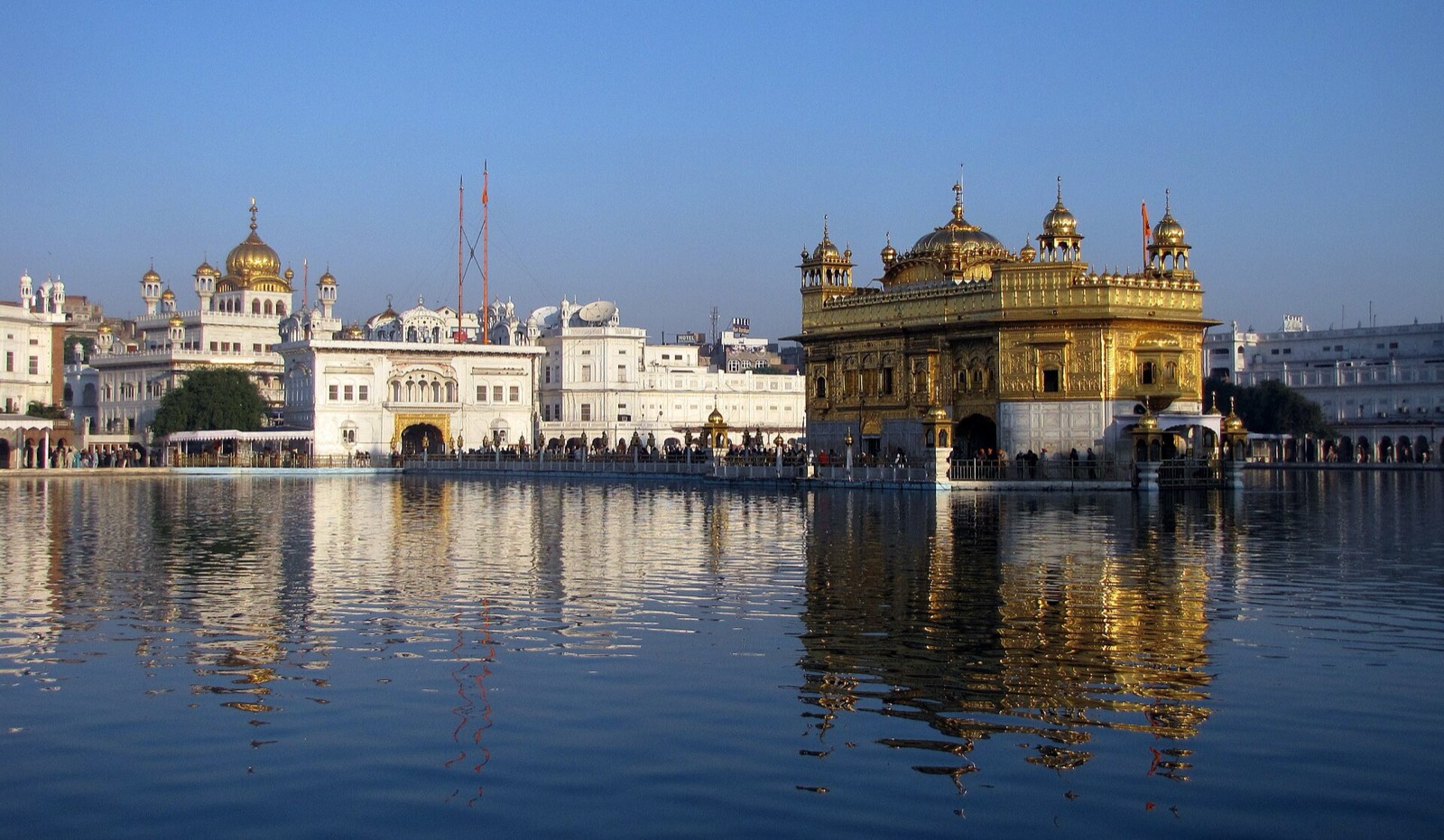
Explore the departmentPhotograph: Akal Takht and Harmandir Sahib, Amritsar, Punjab, India — Jasleen Kaur, CC BY-SA 2.0, via Wikimedia Commons
Mīrī & Pīrī — the temporal and the spiritual, held together
The Gurus built institutions, not just ideas
- SaṅgatThe congregation — authority sits with the gathered, not a clergy.
- Paṅgat & LaṅgarEveryone eats in one row. The kitchen is a political statement.
- Panj PyāreFive, chosen and equal, act for the whole. Leadership without a throne.
- GurmatāA decision taken in the presence of the Guru, binding on the Panth.
- Sarbat KhālsāThe whole Panth in assembly — the highest collective body.
- Akāl TakhtThe seat of temporal authority, facing Darbār Sāhib. Mīrī and Pīrī together.
The department studies each of these as something meant to be practised — sovereignty you can run, not just admire.
What you'll study
Three lines of work
Sovereignty
Miri-Piri, Halemi Raj, and Sikh political philosophy from the Gurus to the present.
The community
Caste and its rejection, the gurdwara and the Panth's institutions, identity in the diaspora.
Kirat and dasvandh
Honest livelihood, giving, and the economics of a household run on Sikh principles.
Signature courses
Where to begin
Three courses that show the range of the department — an opening, a deep reading, a graduate seminar.
Faculty & sources
Taught from the authorities
Courses here are attributed to — and drawn from — the scholars whose work is definitive in the field.
Guided journeys
Follow a path, not a pile
A path runs foundations → advanced; finishing one course lights up the next.
The department curriculum
66 courses, 4 subjects
Open a subject to see its courses, foundations through graduate.
Sociology24 courses
Caste and Sikhi: Guru Nanak's Radical Rejection
An introductory sociology of caste and Sikhi: what caste is, how Gurbani rejects it, how Langar and the Panj Pyare embodied equality, the Dalit Sikh experience today, and why caste still persists despite the Guru's clear rejection.
Who Am I? Sikh Identity in the Diaspora
A course for young Sikhs growing up in Canada, the UK, US and Australia: what Sikh identity really is, cultural vs practicing Sikhi, Kes and Dastaar, peer pressure, Chardi Kala, and building your own bond with Gurbani.
Faith into Community: An Introduction to the Sociology of Sikhi
Sets up the course: faith is lived with others, and sociology gives us tools to see how that works.
Sangat and Pangat: Craft, Community, and Equality
A sociology course about the two practices that hold a Sikh community together: ਸੰਗਤ (the gathered congregation) and ਪੰਗਤ (sitting in a single row to eat the shared meal of langar as equals). Using plain English and a sociological lens, the course asks how shared worship and a shared meal can dissolve the rankings…
Sikh Social Justice and Modern Advocacy: The Sant-Sipahi in Action
This course examines how the Sikh ideal of the ਸੰਤ-ਸਿਪਾਹੀ — the saint-soldier who unites contemplative devotion with moral courage — translates into the institutions and practices of modern social justice advocacy. Drawing on Gurbani, Sikh history, and contemporary sociology, students trace the journey from the battlefield ethic of the Khalsa to the courtroom, the picket line, the refugee shelter, and the interfaith coalition. The course surveys Sikh civil rights movements across the United States, the United Kingdom, and Canada; anti-discrimination law; the labor ethic rooted in ਕਿਰਤ ਕਰਨੀ; the work of organizations such as the Sikh Coalition and United Sikhs; the long campaign for recognition of the 1984 violence; and the theology of solidarity that underwrites Sikh alliances with Muslim, Black, and Indigenous communities. Throughout, students learn to distinguish principled coalition-building from the dissolution of identity, and to read advocacy as an expression of ਸਰਬੱਤ ਦਾ ਭਲਾ — the well-being of all. The arc closes with the Guru's vision of ਹਲੇਮੀ ਰਾਜ, a polity of humility and justice, as the horizon toward which Sikh advocacy aims…
Sikhi in Australia: The Southern Hemisphere's Fastest-Growing Sikh Community
This course traces the Sikh presence in Australia from the camel-driving pioneers of the nineteenth-century outback through the exclusionary decades of the White Australia Policy to the post-1970s migrations that have made Sikhs one of the continent's fastest-growing faith communities. Students examine how a distinctly Australian Sikh identity has taken shape at the meeting point of laid-back Antipodean culture and Punjabi heritage, and how Sikhs have entered rural agriculture, parliamentary politics, interfaith dialogue, and civic festival life. The course combines sociological analysis with historical narrative to map a diaspora that is at once deeply rooted and rapidly expanding.
Sikhi in Britain: From Soldiers to Citizens
This course traces the British Sikh story from the regiments of the British Indian Army through the mass labour migrations that followed the Partition of 1947 to the formation of one of Europe's most visible diaspora communities. It examines the landmark legal struggles, the building of monumental gurdwaras, the layered question of British Sikh identity, and the unresolved politics of the diaspora.
Sikhi in Canada: The Largest Sikh Diaspora Outside India
This course traces the Sikh presence in Canada from the first arrivals in 1897 through the trauma of the Komagata Maru and the long struggle for inclusion, to the contemporary reality of one of the most influential Sikh communities in the world. Students examine settlement patterns in British Columbia and Ontario, the politics of Canadian multiculturalism, and the remarkable civic and political prominence Sikhs have achieved. The course balances celebration of integration with honest analysis of racism, the Air India tragedy, and diaspora nationalism.
Sikhi in the Punjab: The Homeland and Its Living Tradition
This course examines the Punjab as the geographical, cultural, and spiritual cradle of the Sikh tradition, tracing how the land of the five rivers shaped the lives of the ten Gurus and the institutions they founded. Students explore the rupture of the 1947 Partition, the sacred geography of Harmandir Sahib and the Takhts, and the social challenges facing Punjab today. The course argues that land, memory, and faith are deeply intertwined in Sikh identity.
Sikhi in the United States: From Bhai Jawala Singh to the Sikh Coalition
This course traces the history of Sikhs in the United States from the pioneering Punjabi agriculturalists who arrived in California in the early twentieth century through the convert communities, post-1984 refugees, and civil-rights advocates of the present day. Students examine how American law, racism, and migration shaped a distinctive and internally diverse Sikh American identity. The arc runs from Bhai Jawala Singh's Stockton Gurdwara of 1912 to the legal advocacy of the Sikh Coalition after 9/11.
Craft, Caste & Its Rejection
A plain-English but graduate-depth look at how the Sikh Gurus rejected caste (jati), built langar and sangat as institutions that act it out in daily life, and an honest sociological accounting of where caste has nonetheless persisted among Sikhs.
Gender, Family & the Householder in Sikh Society
A graduate-level sociological study of the family, marriage, kinship, and gender in Sikh life, written in plain English. The course treats the householder life (grihast) as the Sikh social norm rather than an inferior alternative to renunciation; examines the dignity and theological equality of women in Gur…
Organising the Panth: The Gurdwara, the SGPC, and Sikh Collective Authority
Introduces the gurdwara as a social institution and the central place where Sikh community life is organised.
Sikhi in East Africa: Kenya, Uganda, and the Indian Ocean Sikh Diaspora
This course examines the formation, flourishing, and forced transformation of the Sikh community in East Africa, from the laborers and artisans who built the Uganda Railway in the 1890s to the prosperous gurdwara-centered communities of colonial Kenya and Uganda. It traces how East African Sikhs preserved Panthic identity far from Punjab, navigated the 1972 Uganda expulsion under Idi Amin, and became a distinctive "twice-migrant" diaspora whose Swahili-Punjabi culture reshaped Sikh communities in Britain and Canada.
Sikhi in Germany and Continental Europe: A New Community in an Old Land
This course examines the formation and consolidation of Sikh communities in Germany and across continental Europe, tracing the arc from a tiny post-war presence to substantial congregations built largely by asylum seekers fleeing the violence of 1984 and its aftermath. It analyzes how European models of secularism, citizenship, and integration interact with the Sikh commitment to a visible religious identity, especially the dastaar. Students will engage with legal disputes over turbans in schools and identity documents, transnational Sikh networks, and the comparative politics of religious visibility in France, Belgium, Italy, and beyond.
Sikhi in Latin America: Chile, Argentina, and the Yogi Bhajan Legacy
This course examines the emergence of Sikh communities in Latin America, focusing on Chile and Argentina, where the Healthy, Happy, Holy Organization (3HO) and Sikh Dharma International established convert-led congregations through the network of Harbhajan Singh Khalsa Yogiji (Yogi Bhajan). Students will analyze how a Kundalini-yoga-inflected, Spanish-speaking form of Sikh practice took root amid Catholic cultural heritage, and how this distinctive expression relates to, and sometimes diverges from, mainstream Punjabi Sikh tradition. The course foregrounds the diversity of the global Sikh panth and the sociological questions raised by religious conversion across linguistic and cultural frontiers.
Sikhi in Southeast Asia: Malaysia, Singapore, and the Sikh Spread East
This course traces the migration, settlement, and transformation of Sikh communities across the Malay Peninsula and Singapore from the late nineteenth century to the present. It examines how Sikh police, soldiers, and watchmen of British Malaya built enduring gurdwara networks, and how Sikhs negotiated a distinctive "Punjabi-Malaysian" identity within Malay-cultural and Chinese-majority societies. Students will analyze the sociology of a small but resilient diaspora shaped by tropical climate, colonial labor regimes, and post-colonial nation-building.
The Sikh Diaspora: Migration, Community, and Identity Abroad
A sociological study of how Sikhs became a global community. The course traces the main waves of migration to Britain, North America, East Africa, and beyond; the building of gurdwaras as anchors of settled life; and the work of keeping a visible identity (kes and dastaar) alive in new societies. It pays close…
Craft, Social Change, and the Sikh Future
A capstone framing: what sociology can and cannot say about religious change, and why the Panth makes a good case study.
Community Building Theory and Gurmat: An Advanced Study
This graduate seminar applies sociological theories of community formation — social capital, Tönnies, Durkheim, Weber — to the Sikh concept of ਸੰਗਤ, analyzing how Gurmat principles both intersect with and exceed the categories of secular community theory. Students examine Sikh institutional forms including ਲੰਗਰ, ਸੇਵਾ, and ਖ਼ਾਲਸਾ governance through multiple sociological lenses. The course culminates in the development of a preliminary Gurmat community development theory.
Gender Theory and Sikh Studies: Advanced Critical Analysis
This graduate seminar applies feminist and gender theory — including Butler's performativity, Crenshaw's intersectionality, and postcolonial critique — to the analysis of Sikh gender dynamics, from the feminist theology of ਸ੍ਰੀ ਗੁਰੂ ਗ੍ਰੰਥ ਸਾਹਿਬ to the colonial construction of Sikh femininity in the Singh Sabha movement. Students engage critically with foundational scholarship by Nikky-Guninder Kaur Singh and Doris Jakobsh and develop the outlines of a feminist Gurmat critique. The course addresses contemporary debates about women's religious authority, same-sex marriage, and LGBTQ+ inclusion in Sikh communities.
Sikh Community, Power, and Society: Advanced Sociological Analysis
This graduate seminar applies advanced sociological theory to the study of the Sikh community, examining questions of identity construction, religious boundaries, gender, diaspora, nationalism, and institutional power. Drawing on Harjot Oberoi's landmark sociological work, classical sociological theory, and contemporary Sikh studies scholarship, students analyze the Sikh community as a complex social formation shaped by theology, history, and the demands of modernity. The seminar prepares students to conduct original sociological research on Sikh communities globally.
Sikh Diaspora Social Theory: Identity, Community, and Belonging
This graduate seminar develops a rigorous social theory of the Sikh diaspora, engaging transnationalism, cultural identity theory, and ethnoreligious sociology through case studies of British, North American, East African, and Australasian Sikh communities. Students develop tools for analyzing identity formation, institutional development, and normative negotiation in diaspora contexts.
Sikh Institutions and Power: SGPC, Takhts, and Governance
This graduate seminar analyzes the sociology of Sikh institutional power, examining the historical development and contemporary functioning of the SGPC, the five Takhts, and the complex relationships among religious authority, political power, and community governance. Students engage critically with institutional structure, caste and gender inequalities, diaspora governance, and reform possibilities grounded in Gurmat principles.
Politics16 courses
Sikhi and the Political: An Introduction to Sikh Political Thought
A plain-English introduction to the idea that Sikhi is not a withdrawn, otherworldly religion but a tradition that joins the spiritual and the worldly. Drawing on Sirdar Kapur Singh's writings, the course explains how Sikh thought holds spiritual freedom and a just social order together, why this matters for…
Halemi Raaj: Gurbani's Vision for Political Leadership
A 200-level study of Halemi Raaj (ਹਲੇਮੀ ਰਾਜੁ), Gurbani's vision of just, compassionate political power. Covers Sarbat da Bhala, Deg Teg Fateh, Dharam Yudh, historical Sikh governance, and modern applications.
Sikh Democratic Engagement: Civic Duty, Voting, and Political Participation
This course argues that the Sikh tradition does not call its adherents to retreat from public life but to enter it with ਧਰਮ as their moral compass. Beginning with the ancient institution of the ਸਰਬੱਤ ਖ਼ਾਲਸਾ — among humanity's oldest sustained experiments in participatory, consensus-based governance — the course traces a continuous Sikh political imagination from the eighteenth-century ਗੁਰਮਤਾ to contemporary voting, candidate evaluation, community organizing, accountability movements, and coalition-building. Students will learn to read civic participation as a form of ਸੇਵਾ, to evaluate candidates and parties through a Gurmat lens, to resist the idolatry of partisan loyalty, and to engage diverse coalitions without surrendering Sikh identity. Across twelve lessons the course combines primary-source Gurbani, the historical record of the Khalsa Commonwealth, and modern political science to equip students for grounded, ethical civic life…
Miri-Piri: The Spiritual and the Temporal
A close study of the Sikh teaching that the spiritual and the worldly belong together: the two swords of Guru Hargobind Ji, the Akal Takht, the saint-soldier ideal, and what just power (Halimi Raj, Deg Teg) means in Sikh life.
From Misls to the Sarkar-i-Khalsa: Sikh Statecraft, 1716–1849
How Sikhs actually governed — the misl confederacies of the eighteenth century, the Dal Khalsa, and the Sarkar-i-Khalsa under Maharaja Ranjit Singh: justice, revenue, religious pluralism, and the lessons and limits of that statecraft.
Gurbani and Political Ideologies: Socialism, Nationalism, and the Halemi Raj Vision
This upper-division seminar examines how ਗੁਰਬਾਣੀ relates to the major political ideologies that organize the modern world — socialism, communism, liberalism, progressivism, conservatism, nationalism, oligarchy, and nativism. Its governing thesis is that Gurmat does not align with any earthly political party; it transcends and critiques them all. The Gurus' vision of ਹਲੇਮੀ ਰਾਜ — the realm of humility — is neither capitalist nor socialist, neither nationalist nor globalist. Each ideology carries a fragment of truth that Gurmat affirms and a fatal flaw that Gurmat rejects. Through close reading of ਜਪੁਜੀ ਸਾਹਿਬ, ਆਨੰਦ ਸਾਹਿਬ, ਸੁਖਮਨੀ ਸਾਹਿਬ, and the Sikh political tradition of ਮਿਸਲਾਂ and Khalsa Raj, students learn to evaluate political programs against the standard of ਨਿਆਉ (justice), ਸਰਬੱਤ ਦਾ ਭਲਾ (welfare of all), and the ਸੰਤ-ਸਿਪਾਹੀ ideal. The course is deliberately non-partisan: it equips Sikhs to be principled participants in any polity without surrendering Gurmat to the categories of left or right. We end by sketching a Gurmat political ethics adequate to the twenty-first century…
Justice, Tyranny, and the Sikh Response
A graduate-level, plain-English course on the Sikh tradition of standing against injustice. It studies the historical martyrdom of Guru Tegh Bahadur in 1675 as a sacrifice for others' freedom of conscience, the ethic of dharam (righteous duty) in public life, the high bar Sikh tradition sets before resistance to…
Khalsa Raj: Sikh Political Leadership and the Principles of Halemi Raaj
An advanced study of Sikh political leadership through the lens of Halemi Raaj, the realm where the weak are protected, from Banda Singh Bahadur to Maharani Jind Kaur, and its application to modern governance.
Sovereignty and the Khalsa
This course is a historical and doctrinal study of the Sikh idea of sovereignty. It asks what Sikhs have meant by the words ਰਾਜ ਕਰੇਗਾ ਖਾਲਸਾ, the Khalsa shall rule, and how that claim sits beside the older Gurbani idea of ਹਲੇਮੀ ਰਾਜ, a humble and just rule. We examine the belief that sovereignty belongs not to a…
Sikhs and the Modern State: Citizenship, Rights, and the Panth in a Secular Age
This course is a calm, balanced survey of how Sikhs live as citizens of modern states. We look at the questions that come up when a faith born in a very different age meets constitutions, courts, parliaments, and the idea of a religion-neutral government. What does citizenship ask of a Sikh, and what may a Sikh…
Sikh Political Ethics: Power, Service, and Accountability
A capstone course on the ethics of power seen through Gurmat. Having finished the other politics courses, you already know the Sikh story and its institutions. Here we ask the harder, more practical question: what makes the use of power right or wrong? In plain English but with graduate-level care, we treat…
Advanced Sikh Constitutional Theory and Governance
This graduate seminar conducts a rigorous investigation of Sikh constitutional theory and the principles of governance embedded in Gurmat political philosophy. Drawing on Kapur Singh's Parasaraprasna, the concept of ਮੀਰੀ-ਪੀਰੀ, and classical constitutional theory, students analyze the Sikh tradition's distinctive account of authority, law, and political community.
Comparative Political Theory: Sikh and Global Perspectives
This graduate seminar uses comparative political theory methodology to situate Gurmat political philosophy in dialogue with major traditions of global political thought—Islamic, Buddhist, Confucian, and Western liberal. Students develop analytical frameworks for identifying genuine commonalities and important differences, and argue for Gurmat's distinctive contributions to global political theory.
Guru Gobind Singh's Political Vision and Legacy
This course examines the political theology of Guru Gobind Singh, situating his thought within seventeenth-century Mughal imperial crisis and the emergent Sikh sovereign imaginary. Drawing on the Zafarnama, Gurbilas Patshahi 10, and the Suraj Prakash, students analyze how sovereignty, justice, and sacred war were theorized in Guru Gobind Singh's court. The course concludes with long-run assessments of his legacy in Sikh constitutionalism and diaspora political thought.
Sikh Nationalism, Sovereignty, and the Modern State
This graduate seminar critically analyzes the historical development and contemporary dimensions of Sikh nationalism, examining the tension between the ਖ਼ਾਲਸਾ Panth's sovereignty claims and the modern nation-state system. Drawing on Oberoi, Tatla, and political theory, students investigate how Sikh political identity has been constructed, contested, and mobilized.
Sikh Political Philosophy: Sovereignty, Justice, and the Halemi Raj
This graduate seminar examines the foundations of Sikh political philosophy through rigorous engagement with Gurbani, the doctrine of Miri-Piri, Kapur Singh's political theology, and contemporary debates about Sikh sovereignty. Students analyze the Gurmat vision of just governance, the theological grounding of political resistance, and the concept of the Halemi Raj as a model for a just social order.
Economics14 courses
Sikh Business Ethics: Kirat Karni, Honesty, and Dasvandh
An introduction to Gurmat economic ethics: the three pillars of Kirat Karni, Naam Japna, and Vand Chakna; Dasvandh; Gurbani on dishonest trade; Sikh trust-based commerce; the Langar model; and modern Sikh entrepreneurs.
The Honest Rupee: A Sikh View of Wealth and Work
Sets up the whole section: work, wealth, sharing and contentment are spiritual matters in Gurmat, not separate from faith.
Kirat Karni: The Craft and Dignity of Honest Labour
A graduate-level but plainly written course on Kirat Karni, the Sikh principle that earning an honest living by one's own effort is a spiritual duty, not merely an economic necessity. The course explains why the Gurus dignified all honest work, what 'haq halaal' (rightful earning) means as an ethic against fraud…
Dasvandh & the Economics of Giving
A plain-English, graduate-depth study of dasvandh, the Sikh practice of setting aside a tenth of one's earnings for the common good. The course traces its roots in the Guru period, explains how the masand system gathered and moved resources across a scattered community, weighs charity against structural giving, and…
Sikh Economic Ethics: Dasvandh, Langar, and Justice in the Marketplace
This course argues that ਦਸਵੰਧ and ਲੰਗਰ are not merely devotional customs but the operational core of a complete economic philosophy — one that predates and transcends both socialism and capitalism. Drawing on Gurbani, the Sikh institutional tradition, and comparative political economy, students examine how the integrated triad of ਕਿਰਤ ਕਰਨੀ, ਵੰਡ ਛਕੋ, and ਨਾਮ ਜਪੋ produces a system in which honest labour is sanctified, surplus is voluntarily redistributed, and the dignity of the poor is structurally protected. Across twelve lessons we trace the theology of tithing, the working mechanics of the communal kitchen, Gurbani's critique of ਲੋਭ and hoarding, and the vision of ਹਲੇਮੀ ਰਾਜ as a polity of justice. We compare Gurmat economics rigorously against socialism, capitalism, and libertarianism, showing where each converges and diverges, and we ask what a contemporary Gurmat economic vision — grounded in ਸਰਬੱਤ ਦਾ ਭਲਾ — might offer a world of widening inequality and ecological strain…
The Langar Economy
A plain-English look at ਲੰਗਰ as an economic model: a kitchen that feeds anyone, free, every day. We study how a gift-based, non-market institution funded by the sangat and by seva manages to feed millions, why it survives without prices, what it does in disaster relief today, and what it teaches about abundance,…
Craft, Cooperation, Sarbat da Bhala & a Just Economy
A graduate-level study, in plain English, of what Sikh teaching has to say about how an economy should work. We start from the daily Sikh prayer for the welfare of all, sarbat da bhala, and ask what it means for honest work, fair wages, cooperation instead of exploitation, and care for the poor. Then we use those…
Craft, Wealth, Greed & Contentment: The Inner Economics of Gurmat
Gurmat does not separate the marketplace from the soul. This lesson sets up the course by treating money, work, and desire as inner questions before they are financial ones.
Capstone: Sikhi and Modern Economic Systems
A 400-level capstone for students who have finished the earlier economics courses. It takes the Gurmat economic values you already know - honest work, sharing, and contentment - and asks how they speak to the big economic systems people live under today: capitalism and markets, socialism and welfare states, ethical…
Gurmat and Distributive Justice
This graduate seminar examines the concept of distributive justice — the fair distribution of resources, opportunities, and welfare across society — from the perspective of Gurmat theology and in dialogue with major Western theories of justice, particularly John Rawls's theory of justice as fairness. Drawing on primary texts from the Guru Granth Sahib and contemporary political philosophy, students develop a rigorous account of the Gurmat vision of just distribution and its implications for contemporary economic policy. The seminar explores both the convergences and the significant differences between Rawlsian and Gurmat approaches to economic justice.
Gurmat Economic Philosophy: A Graduate Seminar
This graduate seminar develops a systematic account of Gurmat economic philosophy, drawing on primary texts from the Guru Granth Sahib and the broader Sikh theological tradition alongside contemporary economic theory. The seminar examines the foundational Gurmat principles governing economic life — honest labor, sharing, the critique of exploitation, and the vision of an economy oriented toward universal welfare — and develops their implications for contemporary economic ethics. Students engage both classical Sikh textual sources and contemporary scholarly work in Sikh economics and religious ethics.
Halemi Raj: The Economics of a Just Sikh Society
This graduate seminar investigates the concept of Halemi Raj — the 'reign of the humble,' the Sikh vision of a just society governed by divine ethics — as a comprehensive political-economic framework. Drawing on Kapur Singh's foundational Parasaraprasna, the Guru Granth Sahib, and contemporary political philosophy, students examine how Gurmat political theology generates a distinctive vision of just governance, equitable economic relations, and collective welfare. The seminar traces the concept from its scriptural roots through historical expressions and develops its implications for contemporary political economy.
Langar as Economic System: Theory, Practice, and Global Impact
This graduate seminar conducts a rigorous analysis of the Sikh ਲੰਗਰ institution as an economic system, examining its theoretical foundations in Gurmat ethics, its historical development, its contemporary global expressions, and its implications for food systems research, institutional economics, and political economy. Students engage primary Sikh textual sources alongside contemporary economic analysis to develop both a deep understanding of the ਲੰਗਰ's theological grounding and a rigorous account of its economic logic and global relevance.
Sarbat da Bhala and Global Development Economics
This graduate seminar develops the concept of ਸਰਬੱਤ ਦਾ ਭਲਾ (the welfare of all) as a Sikh contribution to global development economics, examining its theological foundations, institutional expressions, and implications for contemporary development theory and practice. Students engage primary Sikh textual sources alongside major frameworks in global development economics — including Sen's capability approach, the Human Development Index, and post-development critiques — to develop a rigorous account of how the Sikh universal welfare vision contributes to and challenges contemporary development discourse.
Financial Literacy12 courses
Money Basics: Budgeting, Checking & Savings
Money Basics: Budgeting, Checking & Savings
Credit Scores, Credit Cards, and Debit Cards: A Plain-English Guide
A plain-English course on how credit works: what a credit score is and what moves it, how credit cards and debit cards differ, what interest and APR really cost you, how to use credit responsibly, why paying only the minimum is a trap, and how to protect yourself from fraud. General educational cont
Getting Out of Debt: A Plain-English Guide
A simple, plain-English course on understanding debt and getting free of it: the difference between good and bad debt, how interest compounds against you, two proven payoff methods (the debt snowball and the debt avalanche), the well-known 7 Baby Steps framework popularized by Dave Ramsey, and pract
The Saver's Path: Building Savings and Emergency Funds
The Saver's Path: Building Savings and Emergency Funds
Investing Basics: Assets vs Liabilities
Investing Basics: Assets vs Liabilities
Retirement Saving: 401(k)s, IRAs & the Power of Compound Growth
Retirement Saving: 401(k)s, IRAs & the Power of Compound Growth
The Long Game: Building Generational Wealth
The Long Game: Building Generational Wealth
Dasvandh as Spiritual-Financial Practice: A Graduate Study
This graduate seminar investigates the Sikh practice of Dasvandh — the commitment of one-tenth of one's income to the community — as a theological, ethical, and economic institution. The course situates Dasvandh within the broader history of religious tithing, the economics of voluntary giving, and contemporary philanthropy theory, while examining its distinctive Gurmat grounding. Students engage primary Sikh sources, the Sikh Rahit Maryada, and leading scholarship in religious economics and philanthropy.
Ethics, Markets, and Gurmat: A Critical Analysis
This graduate seminar constructs a rigorous Sikh ethical analysis of contemporary market economies, examining the moral assumptions of market theory, the Gurmat critique of market ideology, and the application of Sikh principles to specific market practices including financial services, labor ethics, corporate governance, and consumer culture. Drawing on the SGGS, Gurmat virtue ethics, and leading market ethics scholarship, students develop an original Sikh economic ethics for the contemporary world.
Sikh Community Financial Systems: Historical and Modern
This graduate seminar examines the historical development and contemporary operation of Sikh community financial systems, from the Masand collection network of the Guru period through the SGPC's institutional finance to diaspora Gurdwara economics and digital community finance. Students engage economic history, institutional economics, and the sociology of religion to construct a comprehensive account of how Sikh communities have mobilized and deployed financial resources across five centuries.
Sikh Philanthropic Finance and Institutional Giving
This graduate seminar examines Sikh philanthropic finance as a multi-layered phenomenon: theologically grounded in Gurmat values, historically institutionalized through the Gurdwara system and the SGPC, and practically expressed through the activities of diaspora communities and humanitarian organizations. Students analyze primary Sikh sources, historical institutional data, and contemporary philanthropy scholarship to construct a rigorous account of Sikh institutional giving.
Wealth, Stewardship, and Sikh Values: An Advanced Seminar
This graduate seminar examines the Sikh theological and ethical framework for wealth stewardship, integrating Gurmat principles with contemporary economic theory, behavioral economics, and applied finance ethics. Drawing on the SGGS and the three-pillar framework of Sikh ethical life, students construct a rigorous account of how wealth should be earned, managed, deployed, and shared according to Gurmat values. The course addresses wealth inequality, investment ethics, and estate planning as contemporary applications.
Start where your question is
You do not need a background, an application, or a fee. Pick a course and begin — the department is here whenever you want to go deeper.
